

Views: 0 Author: Site Editor Publish Time: 2026-03-09 Origin: Site


A power chair is daily freedom.When the Electric Wheelchair Battery fades, plans shrink fast.Range drops. Charging feels random. Costs rise.In this guide, we focus on simple habits.
They reduce deep discharge and heat stress.They keep performance steady, day after day.You’ll learn seven care tips that work in real life.They fit dual-battery chairs and single packs.They also cover lead-acid and lithium systems
Battery life is rarely determined by one big mistake. It is shaped by small habits repeated daily. The following seven steps prevent most early failures and improve reliability over time.
A deep-cycle Electric Wheelchair Battery prefers full recovery cycles. Even if you used only 30% of the charge, restoring it overnight keeps internal chemistry stable. When batteries remain partially discharged for long periods, sulfation (in lead-acid) or stress imbalance (in lithium systems) increases gradually.
Create a predictable charging rhythm. Park the chair in the same place each evening. Use a stable wall outlet. Connect carefully. Ensure airflow around the charger to prevent heat buildup. This routine reduces anxiety the next morning and ensures consistent starting range.
For organizations managing multiple chairs, implementing a nightly charging policy significantly lowers early capacity complaints.
Modern chargers operate in phases. They begin with bulk charging, shift to absorption, then stabilize into maintenance mode. When unplugged prematurely on a regular basis, the battery may never complete its full chemical balancing cycle.
Occasional short charges are acceptable, but they should not replace full cycles. Allow the charger indicators to signal completion. Many systems require several hours for a full cycle. If range feels inconsistent despite nightly charging, incomplete cycles may be the reason.
Voltage and amperage must match the battery system. A charger that physically fits does not guarantee compatibility. Overvoltage can overheat the battery. Undervoltage may cause incomplete charging and long-term degradation.
Confirm three specifications before replacing a charger:
● System voltage (e.g., 24V setup)
● Battery chemistry compatibility
● Connector configuration
Using the original charger remains the safest choice. For B2B buyers, maintaining approved charger lists per model reduces misuse and liability risk.
Allowing the battery to drop near zero repeatedly shortens lifespan significantly. Many users wait until performance noticeably slows. By that stage, internal stress is already high.
Recharge earlier. If you travel on hills or longer routes, raise your recharge threshold. Watch for warning signs such as:
● Sudden power drop during incline
● Rapid battery gauge decline
● Sluggish acceleration
Deep discharge stress accumulates silently. Preventing it adds months or years of usable life.
Temperature management is one of the most overlooked factors in Electric Wheelchair Battery care. Heat accelerates chemical aging. Cold reduces effective capacity and may block safe charging.
After extended outdoor use, allow the battery to cool before plugging in. Avoid leaving the chair in hot vehicles or direct sun. Never charge a frozen battery. Bring it indoors and allow gradual warming.
Ideal storage and charging occur at moderate room temperature. Stable environments reduce performance fluctuations and protect long-term capacity.
Electrical contact quality directly affects performance. Corroded terminals increase resistance, which generates heat and causes unstable power delivery. Loose connections may mimic battery failure.
Perform a monthly inspection:
● Check for corrosion residue
● Ensure nuts and bolts are secure
● Inspect wire insulation
● Clean gently if needed
● Apply protective grease to prevent oxidation
This small step prevents many unnecessary replacements and reduces service downtime.
Charging cables endure repeated bending and tension. Pulling on the cable instead of the connector weakens internal wiring. Extension cords can overheat during long charging cycles.
Always unplug by gripping the connector body. Keep cables away from walking paths. Avoid tight bends near plugs. Maintain clean, stable routing. This reduces charging instability and fire risk.
If managing facilities, implement cable routing standards. Stable wiring prevents repeated wear and improves safety compliance.
Not all Electric Wheelchair Battery systems behave identically. Maintenance rules differ slightly depending on chemistry.
Lead-acid batteries require full recharge cycles and dislike long idle periods. They should never remain deeply discharged during storage. If unused for weeks, they must be recharged periodically to prevent sulfation.
They are heavier and generally last 1–2 years depending on care quality.
Lithium systems are lighter and offer longer lifespan, often 3–5 years under good conditions. They tolerate partial charging better but still suffer from repeated deep discharge or high heat exposure.
Some lithium systems include smart battery management systems (BMS). Even so, external habits such as temperature exposure and extreme discharge still influence longevity.
Feature | Lead-Acid | Lithium |
Weight | Heavy | Lightweight |
Typical Lifespan | 1–2 years | 3–5 years |
Heat Sensitivity | High | High |
Deep Discharge Impact | Severe | Moderate |
Always confirm battery chemistry before applying maintenance instructions.
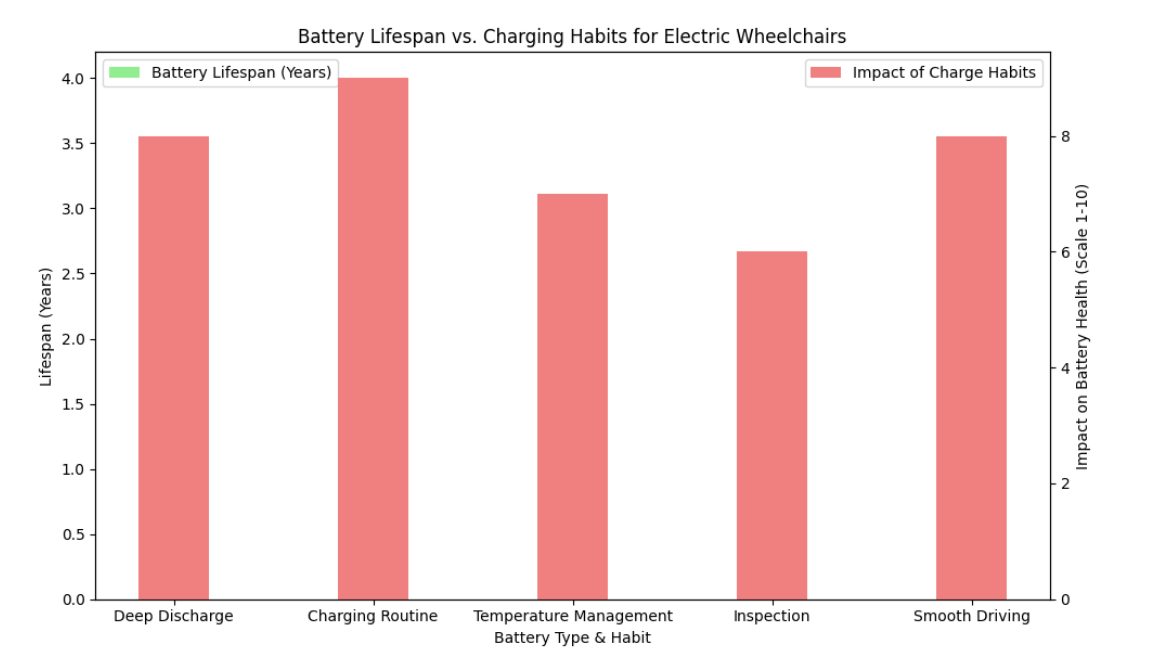
Battery health alone does not determine range. The way we drive changes how fast the Electric Wheelchair Battery drains, especially on long days. Small behavior tweaks can reduce current spikes, keep heat lower, and make the chair feel more stable near the end of a trip.
Sudden joystick moves pull higher current. That extra draw creates more heat and a deeper voltage dip under load, so the chair can feel weaker earlier. A steadier start helps the battery deliver power more smoothly and keeps the controller from working at the edge.
A simple approach works well: start gently for the first few seconds, then ramp up to cruising speed. When stopping, ease off instead of snapping to zero. Over time, this pattern makes range more predictable, especially for users who do repeated short errands in one day.
Inclines demand more power because the chair must fight gravity continuously. Rough pavement, gravel, and thick carpet add rolling resistance, which turns battery energy into heat rather than distance. If you have route options, choose flatter paths and smoother surfaces, even if they take a little longer.
When a hill is unavoidable, keep a steady pace and avoid stop-start climbing. If you stop halfway up, restarting often costs more energy than a slow, continuous climb. For caregivers, it helps to map one “low-drain route” for common trips like clinic visits and grocery runs.
Extra weight increases battery strain. That includes backpacks, oxygen tanks, and heavy items hung on the chair. Even modest reductions can extend range because the chair draws less current to maintain speed and climb small ramps.
Try a quick load audit before leaving. Bring essentials only. Split weight between a backpack and a basket if possible. Keep heavy items centered, not hanging far behind. This reduces strain on both the Electric Wheelchair Battery and the drive system.
Improper storage is a major cause of premature battery failure. Many “dead battery” cases happen after weeks of non-use, when the chair slowly drains itself or sits in poor temperature and humidity. A simple storage routine protects capacity and reduces surprise breakdowns.
If you use a smart charger and the outlet is stable, leaving the chair connected is usually fine. The key is power reliability. Avoid outlets controlled by wall switches and avoid power strips that get turned off. Also keep the chair in a dry indoor spot, so terminals and plugs stay clean.
Before you ride again, do a quick check: confirm the charger shows normal status, then power on and verify smooth response. This avoids leaving home with a “false full” charge caused by a loose plug.
For longer breaks, it often helps to disconnect battery connections if the manufacturer recommends it. Many chairs have small standby drains from electronics, and over weeks that can push the battery toward damaging low states. Keep the chair indoors at moderate temperature and avoid garages that swing hot and cold.
During storage, recharge on a schedule rather than waiting for a problem. A consistent cadence keeps the Electric Wheelchair Battery active and reduces deep discharge risk. If you manage inventory, tracking storage dates and charge checks prevents “dead on arrival” complaints.
Storage Step | Purpose |
Fully charge before storing | Prevent deep discharge |
Store in a dry room | Avoid corrosion |
Avoid extreme heat/cold | Protect chemistry |
Recharge periodically | Maintain capacity |
Early identification prevents unexpected failure during travel. Most batteries fade gradually, but some issues show up as sudden drops under load. If you spot signals early, you can correct habits or fix connections before the chair becomes unreliable.
A noticeable range decrease on the same route is the most common sign. Slower response on inclines is another, because hills expose weak voltage under load. Longer charging time also matters, especially if “full” takes far longer than usual. Sudden voltage drop—where the gauge falls quickly during acceleration—often points to high resistance or aging cells.
If your chair uses two batteries, compare behavior over several days. Uneven performance may indicate one battery is weaker, or a connection on one side is loose, which can make the entire system feel unstable.
Swelling or leakage is serious and should stop use immediately. Unusual heat when resting or charging can signal internal stress or poor contact. Visible corrosion on terminals adds resistance and can cause intermittent power. A burning smell is an urgent warning, often linked to heat at connectors or wiring.
Before replacing the battery, inspect charger function and connection quality. Many “battery failures” are actually loose terminals, corroded contacts, or damaged charging plugs that prevent a full, stable charge.
Replacing an Electric Wheelchair Battery requires precision. Most repeat failures happen because the replacement was mismatched, installed unevenly, or paired with an incompatible charger. A clean replacement process protects safety and preserves expected lifespan.
Many power chairs use two batteries. They work as a team, so they should age together. Replacing only one creates imbalance. The new battery may get overworked, while the older one drags performance down. That imbalance can reduce range and shorten the life of the new battery.
For care facilities, standard practice should be “replace both, record date, record specs.” It simplifies support and reduces unpredictable performance differences between chairs.
Confirm the correct:
● Voltage rating
● Amp-hour capacity
● Chemistry type
● Physical dimensions
● Charger compatibility
Do not assume “higher Ah is always better.” Some chairs and chargers are tuned for specific capacities. Wrong selection can stress charging circuits or change real-world behavior. When in doubt, follow the chair manual and approved parts list.
Batteries require careful handling. They are heavy, and terminals can short if tools bridge them. Wear protective gloves and keep metal tools controlled. Recycle according to local rules. Lead-acid batteries need certified recycling channels, and many regions require regulated disposal.
Symptom | Possible Cause | Immediate Action |
Shorter trips | Deep discharge pattern | Adjust recharge timing |
Inconsistent charging | Cable damage | Inspect connectors |
Power drop on hills | Connection resistance | Clean terminals |
Overheating | Heat exposure | Relocate to cooler area |
Begin with simple checks before assuming battery failure. Many issues are external and easily corrected.
Electric Wheelchair Battery life depends on daily habits. Nightly full charging, steady temperature control, and avoiding deep discharge help prevent early wear. Regular terminal checks keep power stable, while smoother driving and smart storage protect usable range over time.
Start with two habits today. Charge every night and inspect connections monthly. These steps reduce breakdowns, extend lifespan, and lower replacement frequency for both personal users and fleet operators. JBH Medical supports this value with reliable power chair solutions and service that helps teams keep mobility consistent.
A: Often 1–2 years lead-acid, 3–5 lithium, with good care.
A: Charge nightly, finish the cycle, and use the correct charger.
A: Heat, hills, heavy loads, low tire pressure, or deep discharge.
A: For short breaks, yes on a smart charger; for long breaks, disconnect.
A: Swelling, leaks, hot smell, slow charging, or sudden power drops.
A: It varies by chemistry and capacity; replace matched pairs when needed.


