

Views: 0 Author: Site Editor Publish Time: 2026-03-03 Origin: Site


In 2026, premium mobility options can feel tempting, but “worth it” depends on daily results, not shiny specs. This guide shows how to judge an Electric Folding Wheelchair by total value over time—comfort, durability, safety, and support—so you can choose with confidence.
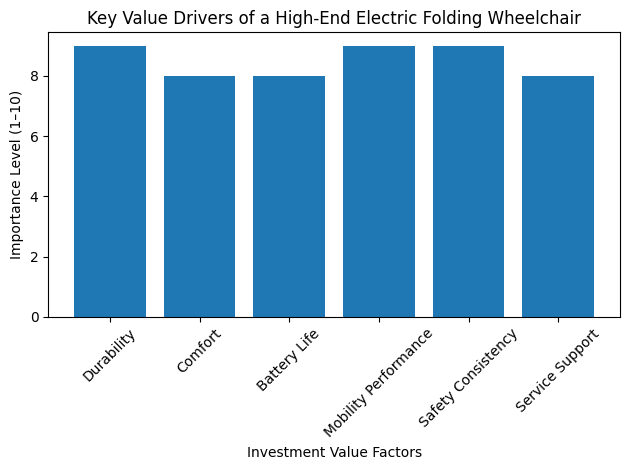
The purchase price is only the beginning. Batteries degrade. Tires wear. Folding hinges experience stress. Controllers face vibration and impact from daily use. Over a three- to five-year ownership period, these elements determine whether a chair becomes a stable tool or a recurring maintenance concern.
Premium models often reduce long-term service frequency. Higher-grade lithium batteries may offer longer cycle life. Reinforced hinges may resist wobble after repeated folds. Better controller tuning may reduce internal stress on components. When downtime is minimized, the user maintains independence. For B2B distributors, lower repair frequency means fewer warranty claims and reduced operational disruption.
A simple ownership lens helps clarify the decision:
Factor | Budget Model Risk | High-End Model Advantage |
Battery lifespan | More frequent replacement | Longer cycle durability |
Folding joints | Early looseness | Reinforced hinge stability |
Repair downtime | Parts delays | Better service network |
Daily strain | Higher vibration | Smoother drive tuning |
When viewed across years instead of months, the premium may balance out through reliability and reduced friction.
Durability in a folding frame requires more than strong material. It depends on structural geometry and hinge engineering. Over time, weaker joints develop subtle play after unfolding. That movement can feel small at first but becomes noticeable on uneven pavement.
A well-built Electric Folding Wheelchair maintains consistent rigidity after repeated fold cycles. Frame stiffness improves steering accuracy and braking stability. Reinforced latch systems lock securely without excessive force. Balanced weight distribution reduces stress during trunk loading.
Durability matters even more for users who transport the chair daily. Caregivers may lift it quickly. Travel environments expose it to handling stress. In these cases, a stronger structure preserves confidence and reduces early wear.
Comfort is often underestimated during short showroom trials. Yet many users sit for several hours per day. Poor seat depth, limited cushioning, and weak lumbar support can lead to fatigue and posture strain. Over time, discomfort reduces usage frequency.
High-end designs often offer contoured cushions, breathable materials, and adjustable seating components. These features distribute pressure more evenly and maintain alignment. Armrest adjustability reduces shoulder strain. Proper footrest positioning stabilizes posture.
Comfort returns value through consistency. If the chair feels supportive, users are more likely to maintain daily routines. In care facilities, improved comfort reduces complaints. For independent users, it preserves confidence during longer outings.
Drive feel defines daily usability. Premium controllers often provide smoother acceleration and deceleration. Reduced joystick correction decreases hand fatigue. Dual motor systems may improve slope stability and traction over small surface irregularities.
In practical terms, this means fewer micro-adjustments in hallways and less anxiety on sidewalks. Predictable braking on mild inclines enhances safety. Tight turning radius simplifies navigation in kitchens, elevators, and shops.
Mobility ROI is cumulative. A slightly smoother ride repeated every day becomes meaningful over months and years.
Safety is not about feature quantity. It is about consistent behavior. Electromagnetic braking must hold reliably on slopes. Anti-tip geometry must stabilize during backward movement. Steering should track predictably in crowded areas.
Premium engineering often improves control calibration and weight distribution. Stable braking builds user trust. Trust encourages independence. For institutions, consistent safety reduces liability exposure.
When testing safety, observe braking on a slight incline and check for smooth reacceleration. Stability during these transitions reveals tuning quality.
Warranty terms alone do not define support. Parts availability, repair turnaround time, and component standardization matter equally. A high-end Electric Folding Wheelchair may justify cost if it comes with reliable parts pipelines and responsive service.
For distributors, stable supply chains reduce operational risk. For individual buyers, faster repairs preserve daily independence. Ownership value increases when service support is transparent and accessible.
Premium models often use lighter yet stiffer materials such as advanced aluminum alloys or carbon fiber composites. These reduce overall weight while maintaining structural integrity. However, material alone is not decisive. Reinforced hinge zones and well-balanced center of gravity improve lifting comfort and folded stability.
Lightweight builds benefit frequent travelers. Structural stiffness benefits daily drivers. High-end engineering attempts to balance both.
Battery systems in premium chairs may feature higher energy density lithium cells and removable packs for flexible charging. Dual-battery configurations extend daily range and reduce range anxiety. For travel-heavy users, removable batteries simplify airport compliance procedures.
Longer cycle life also lowers replacement frequency. Over several years, this becomes a tangible financial benefit.
Higher-end motor assemblies often deliver smoother torque distribution. Improved controllers moderate acceleration curves to prevent jerks. On uneven sidewalks, this refinement translates into steadier motion.
Better cable management also protects electrical systems. Some models use protected routing or structured layouts that minimize snag risk during folding cycles. In select designs, remote modules integrate through shielded or structured wiring systems, enhancing communication stability and reducing interference.
Not all technology adds value. Useful features include programmable speed profiles, battery monitoring displays, and remote positioning assistance. These simplify daily routines rather than complicate them.
Complexity should be matched by support readiness. Smart features only justify cost when reliability and service are dependable.
Frequent travelers often benefit most from premium portability and fold consistency. Fast folding, manageable lift weight, and durable frame joints simplify airport and rideshare transitions. Clear battery labeling further reduces travel stress.
Daily long-duration users benefit from superior seating ergonomics and stable drive feel. For these individuals, comfort and reliability often outweigh initial price differences.
Mixed-terrain users also see value in stronger motor control and stable braking. Sidewalk cracks and mild inclines challenge lower-end tuning more noticeably.
Budget-focused buyers who primarily use flat indoor spaces may not require premium features. For short errands and limited mileage, mid-range models can offer sufficient value.
Ultra-light designs may sacrifice tolerance to rough handling. If caregivers frequently lift and load the chair, reinforced hinge structures should be prioritized over minimal weight.
More technology introduces potential service complexity. Remote modules, app systems, and sensor integrations require dependable support networks.
Premium comfort options may increase weight or folded bulk. Before upgrading seating features, confirm trunk compatibility and storage dimensions.
Focus on high-impact metrics rather than headline numbers. Turning radius, braking consistency, and fold stability matter more than maximum speed. Evaluate real-world range instead of ideal lab figures.
During a trial, fold and unfold repeatedly. Check for latch consistency. Apply light lateral pressure to test rigidity. Sit for at least ten minutes to assess comfort and posture alignment.
Review feedback from users with similar body types and terrain patterns. Ignore overly promotional language and prioritize detailed long-term observations.
A high-end Electric Folding Wheelchair is worth it when it removes daily friction in your main routine. Travel users gain from fast, durable folding and dependable battery systems, while long-hour users benefit from better comfort and posture support. Mixed-terrain users also feel safer through smoother control and consistent braking in real streets.
Before paying more, we should measure storage space, repeat fold tests, confirm battery paperwork, and compare warranty and parts support. JBH Medical helps buyers and resellers focus on long-term value, offering Electric Folding Wheelchair options built for reliable daily use and service-friendly ownership.
A: It’s worth it when an Electric Folding Wheelchair cuts daily friction and reduces repair risk.
A: Track batteries, service, downtime; a premium Electric Folding Wheelchair can lower TCO.
A: They get durable hinges, reliable packs, and easier airport handling in an Electric Folding Wheelchair.
A: Do fold-repeat, wobble check, and incline brake test on an Electric Folding Wheelchair.
A: Early hinge play or weak braking means the Electric Folding Wheelchair may fail long-term value.


