

Views: 0 Author: Site Editor Publish Time: 2026-02-14 Origin: Site


Why do two wheelchairs look similar but feel completely different to use? A sports wheelchair is built for performance, while regular wheelchairs focus on daily comfort.
In this article, you will learn how design choices affect control, stability, and real-world use.
The fundamental difference between a sports wheelchair and a regular wheelchair lies in what each is built to achieve. Their designs are shaped by distinct use cases, which explains why features that improve performance in one context may become limitations in another.
A sports wheelchair is built around dynamic movement and precise control. Its structure assumes frequent acceleration, rapid direction changes, and, in some sports, physical contact. A rigid and lightweight frame helps transfer pushing force efficiently, while a lower, more forward seating position improves balance and responsiveness during active motion. These choices favor short bursts of high effort rather than prolonged sitting.
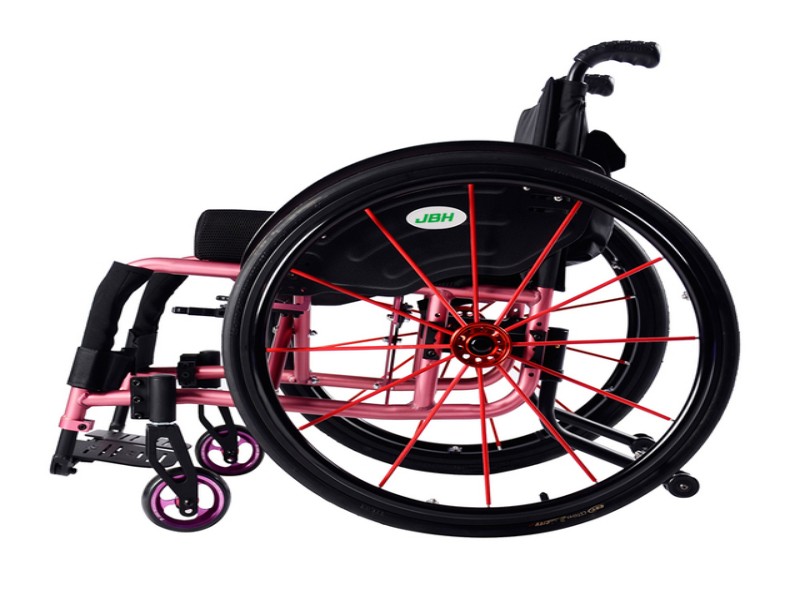
From a functional perspective, a sports wheelchair prioritizes:
● Efficient energy transfer for fast starts and sustained speed
● Sharp turning control during lateral movement and pivots
● Stability during high-speed motion or player-to-player contact
Design focus | Sports wheelchair |
Typical environment | Training and competition settings |
Movement emphasis | Speed and agility |
Seating approach | Active, performance-oriented posture |
Comfort trade-off | Reduced focus on long-duration sitting |
A regular wheelchair is designed to support daily mobility across varied environments. Its design assumes long periods of seated use, frequent stopping and starting, and regular navigation through indoor spaces. Stability and comfort are prioritized to reduce fatigue and maintain posture over time, even if this limits rapid maneuverability.

In practical terms, a regular wheelchair focuses on:
● Consistent support for extended sitting and routine movement
● Stable handling on common indoor and outdoor surfaces
● Compatibility with transfers, accessories, and confined spaces
Design focus | Regular wheelchair |
Typical environment | Home, workplace, and public areas |
Movement emphasis | Predictability and stability |
Seating approach | Upright, supportive posture |
Comfort strategy | Designed for all-day use |
These differing optimization goals clarify why a sports wheelchair excels in athletic environments, while a regular wheelchair remains better suited for everyday mobility and long-term comfort.
While sports wheelchairs and regular wheelchairs may share basic components, small engineering choices dramatically change how they feel in motion. Frame construction, wheel alignment, and seating geometry work together to shape responsiveness, stability, and comfort. These differences become obvious the moment a user pushes, turns, or sits for an extended period.
Design factor | Sports wheelchair | Regular wheelchair |
Frame approach | Rigid, lightweight construction | Heavier, often foldable construction |
Wheel setup | Pronounced camber, wider stance | Upright wheels, narrower footprint |
Seating position | Low and active | Higher and more supportive |
Frame design plays a major role in how efficiently force is transferred from the user to the wheels. A sports wheelchair typically uses a rigid frame made from lightweight materials, minimizing flex and allowing each push to translate directly into motion. This creates a feeling of immediacy and responsiveness, especially during rapid acceleration or repeated bursts of movement.
In contrast, a regular wheelchair prioritizes durability and everyday practicality. Heavier frames and foldable designs make transport and storage easier, but they also absorb more energy during propulsion. The result is a smoother, more forgiving ride that favors consistency over speed, which aligns with daily mobility rather than athletic performance.
Wheel camber and overall wheelbase strongly influence how a wheelchair turns and stays balanced. Sports wheelchairs use outward-angled rear wheels to increase lateral stability and improve control during sharp turns. This configuration allows faster directional changes while reducing the risk of tipping during aggressive maneuvers.
Regular wheelchairs generally keep wheels more upright and closer together. This narrower profile improves clearance through doorways and tight indoor spaces, making everyday navigation easier. While turning may feel less agile, the design supports predictable movement across common surfaces like sidewalks, ramps, and indoor flooring.
Seating geometry determines how the user interacts with the wheelchair during movement. Sports wheelchairs place the seat lower and position the user in a more forward, engaged posture. This lowers the center of gravity and improves control, allowing quicker reactions and better balance during active use.
Regular wheelchairs raise the seat height and emphasize upright positioning. This supports posture, reduces strain during long periods of sitting, and simplifies transfers in and out of the chair. The trade-off is reduced leverage for aggressive pushing, but improved comfort and stability for all-day use.
Together, these structural differences explain why a sports wheelchair feels fast and reactive, while a regular wheelchair feels stable and supportive. Each design reflects a deliberate balance between movement efficiency and everyday usability.
Design differences between a sports wheelchair and a regular wheelchair become most apparent during everyday movement. How the chair responds when turning, accelerating, stopping, or navigating confined spaces determines whether it feels agile, stable, or predictable. These handling characteristics directly affect safety, effort, and usability across different environments.
In active scenarios such as training or competitive play, a sports wheelchair responds quickly to user input. A lighter frame, rigid construction, and wheel alignment designed for performance allow faster acceleration and more immediate directional changes. This makes it easier to react in time-sensitive situations, such as sudden turns or rapid bursts of speed.
A regular wheelchair delivers a different experience. Its handling is intentionally more gradual, favoring smooth starts and controlled turns. This predictable response reduces fatigue during routine movement and helps users maintain balance when navigating sidewalks, ramps, or indoor flooring. The result is a steadier feel that supports consistent daily mobility rather than rapid maneuvering.
Handling aspect | Sports wheelchair | Regular wheelchair |
Acceleration | Fast and direct | Gradual and controlled |
Turning response | Sharp and immediate | Smooth and predictable |
Best use case | Dynamic, time-sensitive movement | Routine daily navigation |
Stability requirements change significantly at higher speeds or during physical contact. Sports wheelchairs are built to remain stable during aggressive movement, often incorporating a wider wheel stance and reinforced frame elements. These features help reduce the risk of tipping during sudden stops, collisions, or lateral shifts common in many wheelchair sports.
Regular wheelchairs prioritize a different form of stability. Their design focuses on controlled stopping, reliable braking, and steady balance at lower speeds. This approach supports safety during transfers, pauses, and prolonged stationary use, which are more common in everyday environments than high-speed or contact situations.
Handling differences also influence how each wheelchair performs indoors and during transport. Sports wheelchairs may feel cumbersome in narrow hallways or tight doorways due to their wider stance and fixed frame. Transporting them often requires more space or partial disassembly, which can limit convenience during daily outings.
Regular wheelchairs are better adapted to indoor environments and frequent transport. Narrower profiles, foldable frames, and compatibility with vehicle storage make them easier to move through homes, offices, and public buildings. This practicality supports a broader range of daily activities, even if it sacrifices some agility and speed.
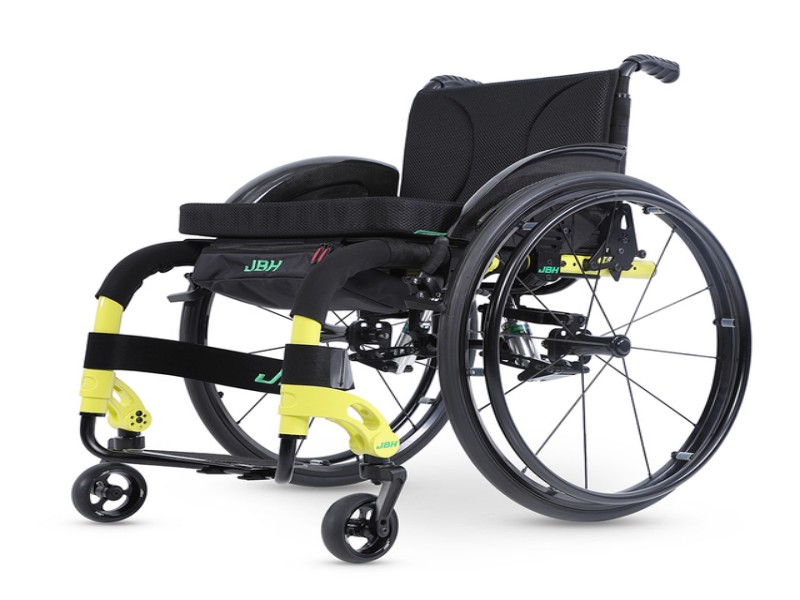
Fit and customization determine how well a wheelchair supports the user’s body and intended activities. While both sports wheelchairs and regular wheelchairs offer adjustment options, the philosophy behind those adjustments is fundamentally different. One focuses on maximizing performance in specific conditions, while the other emphasizes adaptability and comfort across everyday environments.
A sports wheelchair is often built around the individual athlete rather than adjusted after the fact. Measurements such as torso length, shoulder width, reach, and center of mass are taken into account, along with the demands of a particular sport. These inputs influence seat angle, wheel position, camber degree, and frame geometry, all of which affect efficiency and control during movement.
Customization in this context aims to reduce wasted energy and improve responsiveness. A precise fit allows the user to maintain balance during rapid turns, apply force more effectively during propulsion, and stay comfortable during intense but time-limited activity. The result is a wheelchair that feels like an extension of the body rather than a general mobility aid.
Customization focus | Sports wheelchair outcome |
Body measurements | Optimized reach and balance |
Sport requirements | Tuned for speed, contact, or maneuverability |
Seating geometry | Active posture for control |
Adjustment goal | Performance efficiency |
A regular wheelchair approaches fit from a broader perspective. Instead of being built for one activity, it is designed to accommodate changing needs throughout the day. Adjustable seat height, backrest angle, armrests, and footrests allow users to fine-tune comfort and posture for long periods of sitting, varied surfaces, and frequent transfers.
This type of adjustability supports versatility rather than specialization. The goal is to reduce strain, manage pressure distribution, and adapt to different environments, from indoor flooring to outdoor paths. While these adjustments improve comfort and usability, they do not significantly alter handling characteristics or performance limits.
Because sports wheelchairs and regular wheelchairs are customized around different priorities, one rarely serves as a complete substitute for the other. A sports wheelchair excels in controlled, high-energy environments but can feel restrictive or impractical during daily routines. A regular wheelchair, while comfortable and adaptable, lacks the responsiveness and stability needed for athletic movement.
For many users, this leads to a practical conclusion: each wheelchair fills a distinct role. One supports performance during sport or training, while the other supports comfort, safety, and independence in everyday life. Understanding this distinction helps set realistic expectations and avoids compromises that could affect either mobility or performance.
The difference comes down to purpose and design trade-offs. A sports wheelchair focuses on speed and control, while regular wheelchairs support daily comfort. The right choice depends on activity level, environment, and everyday needs.
JBH Medical provides wheelchairs that deliver reliable support, thoughtful design, and practical value.
A: A sports wheelchair prioritizes agility, speed, and control, while regular wheelchairs focus on comfort, stability, and daily mobility.
A: A sports wheelchair can be used short-term indoors, but its width, camber, and seating make daily tasks less practical.
A: A sports wheelchair responds faster to turns and acceleration, whereas regular wheelchairs offer smoother, predictable handling.
A: A sports wheelchair is tailored to body measurements and sport demands to improve efficiency, balance, and control.


