

Views: 0 Author: Site Editor Publish Time: 2026-06-13 Origin: Site


Mobility challenges force a frustrating compromise for users and caregivers. You often bridge the gap between everyday mobility and seamless travel by relying on bulky equipment. Otherwise, you forfeit the trip entirely. The D36 enters this market as a prominent contender in the lightweight mobility space. It promises to ease these travel burdens significantly.
We must set a skeptical, evidence-oriented tone before proceeding. We need to define what "travel-friendly" actually means in practical terms. A true travel device requires strict TSA compliance, minimal trunk space, and independent lifting capabilities.
This article provides a strictly objective, decision-stage evaluation of the motorized portable wheelchair D36. We base this review on engineering facts and real-world travel limitations. You will learn about its spatial footprint, flight regulations, performance boundaries, and precise terrain capabilities. Let us examine whether this device suits your specific travel habits.
True Portability: The D36's folding mechanism prioritizes quick trunk storage, but buyers must verify the exact lifted weight against their physical capabilities.
Airline Compliance: Utilizes FAA-approved lithium-ion batteries, though pre-flight airline notification remains a mandatory risk-mitigation step.
Terrain Profile: Engineered as a compact electric wheelchair for paved surfaces, indoor navigation, and mild inclines; not intended for rugged off-roading.
Target User: Ideal for frequent travelers and active seniors prioritizing space-saving designs over heavy-duty bariatric support.
Understanding lightweight mobility requires setting a clear baseline. We must contrast standard power chairs against modern alternatives. Traditional electric models often weigh well over 100 pounds. They utilize heavy steel frames and large lead-acid batteries. Moving them usually requires an expensive, hitch-mounted vehicle lift. They simply do not fold.
Selecting a modern travel wheelchair shifts this engineering paradigm. The D36 tackles the classic weight versus durability trade-off by using aerospace-grade aluminum. This specific alloy reduces the frame weight substantially. Importantly, it achieves this reduction without sacrificing the structural integrity required for daily operation. Aerospace aluminum flexes slightly under stress, preventing brittle fractures common in cheaper metals.
However, we must address a significant industry blind spot. Manufacturers love marketing the "lift test." They show able-bodied models tossing chairs into vehicles effortlessly. Remind yourself of physical realities. Even a 50-pound chair requires sufficient upper body strength to lift safely. You must lift it over a bumper and extend your arms to place it into an SUV. We recommend testing your lifting capacity beforehand. You might still require caregiver assistance to load the device comfortably.
Technical specifications only matter when they translate into functional benefits. We evaluate the D36 based on how its engineering performs during actual trips.
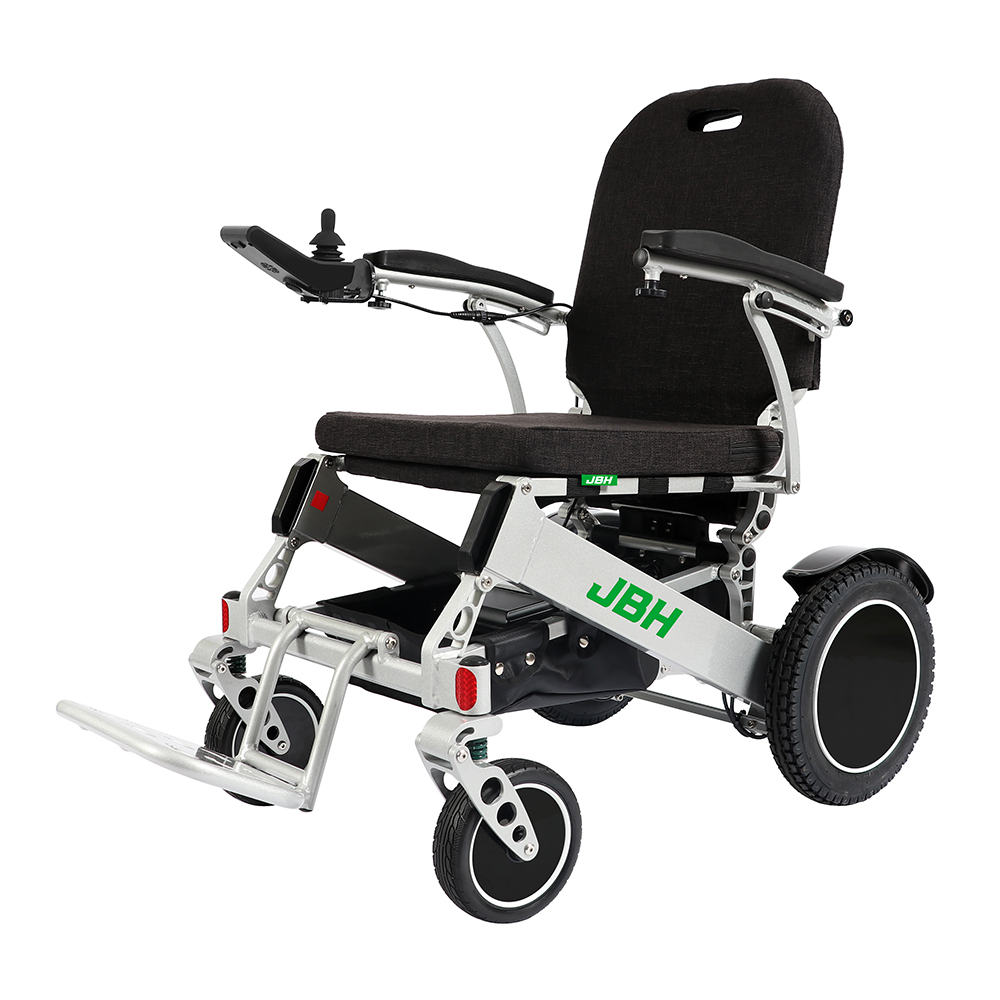
The D36 utilizes a single-motion folding action. You release a locking latch on the rear frame. The chair collapses inward instantly, much like a premium baby stroller. This reduces mechanical complexity and prevents pinched fingers.
Once folded, the spatial footprint becomes highly manageable. It easily slides into standard hallway closets. It clears the narrow doorways of cruise ship cabins. Furthermore, the folded dimensions fit comfortably into a standard sedan car trunk. You do not need an oversized SUV to transport it. This makes hailing standard rideshare vehicles much simpler during vacations.
Manufacturers often highlight motor wattage. We must translate that wattage into practical use. The dual brushless motors provide enough torque to navigate thick, carpeted hotel hallways. They transition smoothly onto concrete sidewalks. They will not bog down over slight door thresholds.
Turning radius acts as a critical maneuverability metric. Standard ADA-compliant bathrooms require a 60-inch turnaround space. The D36 boasts a tight turning circle. This allows users to pivot easily inside public restroom stalls. It also prevents awkward multipoint turns in crowded restaurant aisles.
Sustained comfort dictates how long you can actually explore. The seating material utilizes high-density, breathable foam. This prevents heat buildup during long days at theme parks.
Armrest adjustability proves essential for daily activities. The armrests flip up entirely. This allows users to slide closely beneath standard dining tables. You avoid sitting two feet away from your plate. Finally, the joystick mounting system adjusts for varying arm lengths. Proper positioning prevents shoulder strain during prolonged daily use.
Flying introduces intense regulatory scrutiny. You cannot simply roll up to the gate unprepared. You must understand the lithium-ion compliance framework entirely.
Aviation authorities strictly regulate battery transport due to fire risks. FAA and TSA guidelines dictate specific rules for flying. Usually, passengers can carry mobility batteries under the 160Wh limit. The D36 utilizes an FAA-approved lithium-ion power source. It meets these international safety thresholds. However, pre-flight airline notification remains mandatory. You should call your carrier 48 hours before departure. This prevents unexpected rejections at the security checkpoint.
Taking your motorized mobility device through an airport requires exact protocols. Gate-checking minimizes the time your chair spends in the cargo hold. Follow these risk-mitigation steps before handing the chair to baggage handlers:
Disconnect the power: Turn off the main power switch entirely.
Remove the battery: Slide the battery out of its housing. You must carry lithium-ion batteries into the passenger cabin.
Detach the joystick: Disconnect the controller cable. Remove the joystick completely. Place it in your carry-on bag to prevent catastrophic crushing damage.
Fold and secure: Collapse the chair and strap it tightly. This stops handlers from pulling on weak components.
International travel demands adaptable charging solutions. The D36 charger features voltage adaptability. It accepts inputs from 110V up to 240V. You only need a simple plug adapter for European or Asian wall outlets. You do not need a heavy voltage converter. Realistic recharge times range between 6 to 8 hours from a completely dead battery. We advise charging it overnight to ensure maximum range the following morning.
No single mobility solution works perfectly everywhere. We must establish transparent limitations to prevent user frustration and mechanical failure.
You must understand where the D36 excels and where it fails. It thrives on engineered surfaces. It excels in shopping malls, sprawling airports, and paved walking trails. The small, solid caster wheels navigate smooth ground flawlessly.
Conversely, it fails on rugged terrain. You cannot drive it through deep gravel. The front wheels will dig into soft sand immediately. It lacks the suspension for steep outdoor grades or cracked, root-filled trails. Attempting off-road excursions will leave you stranded and frustrated.
Every frame carries a maximum user weight limit. Approaching this threshold impacts performance directly. Heavy loads drain the battery significantly faster. You will not achieve the advertised maximum range. Furthermore, maximum weight limits put extreme strain on the motors. This heat buildup can trigger automatic thermal shutdowns. The D36 serves best as a lightweight tool. It does not replace heavy-duty bariatric support models.
Owning a portable power chair requires realistic upkeep. Neglecting maintenance degrades performance quickly. Implement this basic schedule:
Tire Checks: Inspect the solid tires weekly. Look for severe flat spots or embedded debris.
Battery Cycle Management: Never leave the battery completely depleted for weeks. Charge it at least once a month during storage to preserve cell health.
Cleaning Electrical Contacts: Dust and moisture build up on connection points. Wipe the battery and joystick contacts with a dry microfiber cloth monthly.
Hardware Inspection: Check the folding latch mechanism periodically. Tighten any loose hex screws along the frame.
Making a final decision requires comparing the D36 against other mobility categories. We present a clear shortlisting logic to guide your purchase.
Evaluate your options using this functional comparison:
Mobility Device Type | Indoor Maneuverability | Physical Exertion Required | Travel Suitability |
|---|---|---|---|
D36 Portable Chair | Excellent (Tight turning radius) | Minimal (Joystick operated) | High (Trunk friendly, flight approved) |
Standard Mobility Scooter | Poor (Wide turning radius) | Minimal (Tiller steering) | Low (Bulky, difficult to fold) |
Manual Ultra-Lightweight | Excellent (Pivots on axis) | High (Requires arm strength) | High (Extremely light) |
This matrix reveals distinct trade-offs. Standard mobility scooters lack indoor maneuverability. They cannot navigate cramped cruise ship cabins. Manual ultra-lightweight chairs require intense physical exertion. The D36 balances minimal physical strain alongside excellent indoor navigation.
Frame the return on investment carefully. You should evaluate the purchase price against eliminated costs. Buying a true compact electric wheelchair removes massive secondary expenses. You no longer need to buy an expensive vehicle mobility lift. You avoid paying daily rental fees for scooters at theme parks or resorts. These eliminated costs often offset the initial purchase price rapidly.
Do not finalize your purchase purely on emotions. Take objective next steps. First, grab a tape measure. Measure your primary vehicle's trunk dimensions exactly. Compare those numbers against the folded specifications of the D36. Second, verify your primary airline's specific mobility equipment policy online. Confirming these two factors ensures a seamless integration into your life.
The D36 establishes a strong position in the lightweight mobility market. It functions as a highly capable, niche-specific tool. Engineers designed it explicitly to solve travel friction. It eliminates the need for expensive vehicle lifts and bulky rental equipment.
However, successful adoption demands careful consideration. You must align your personal physical strength and daily travel habits against the chair's specific engineering profile. Do not expect it to perform like a heavy-duty, off-road vehicle. Appreciate it for its quick folding mechanism, tight maneuverability, and flight-ready design.
We recommend taking immediate action. Review the technical specification sheets thoroughly. Consult an occupational therapist if you have complex seating needs. Finally, contact authorized vendors to confirm warranty details before finalizing your investment.
A: Medicare maintains strict criteria for Durable Medical Equipment (DME) coverage. They only cover devices deemed medically necessary for moving inside your home. They rarely consider "travel" or outdoor community use as a medical necessity. You will likely need to purchase this device out-of-pocket.
A: Yes. The hardware design features excellent modularity. You can unclip the joystick mounting bracket from the right armrest. You then slide it onto the left armrest rail. This accommodates user accessibility preferences seamlessly.
A: Most chairs feature basic IPX water resistance ratings, protecting them from light drizzles. However, they are not waterproof. You must avoid heavy downpours or deep puddles. Excessive water exposure can permanently short-circuit the electrical housing and joystick controller.
A: Yes. The motors feature red freewheel levers near the rear wheels. Flipping these levers down disengages the electronic brakes. This places the motors into neutral. A caregiver can then push the chair manually just like a standard wheelchair.


