

Views: 0 Author: Site Editor Publish Time: 2026-09-13 Origin: Site


Many consumers choose their mobility devices based primarily on aesthetics or maximum top speed. They frequently overlook the underlying electrical architecture. This common oversight creates significant daily risks. An underpowered system strains its components. Mismatched controllers and poor motors lead directly to rapid battery degradation. They result in sluggish incline performance and compromised safety on uneven terrain. Selecting the right hardware is critical for consistent reliability. We created this article to help you navigate these complex technical choices. Our guide provides an objective, evidence-based framework. You will learn exactly how to evaluate core electrical specifications. We will show you how to match these technical capabilities to your exact physical demands. You will also learn to account for your local geographical requirements. By understanding these metrics, you can confidently select a reliable, safe, and efficient device perfectly suited to your lifestyle.
Wattage dictates torque and load capacity: Higher watts mean better incline handling, not necessarily faster speeds.
Voltage represents electrical efficiency: A higher voltage system delivers power more efficiently, reducing heat generation during prolonged use.
Controllers act as the bottleneck or the enabler: A high-wattage motor is only as smooth and safe as its paired controller allows.
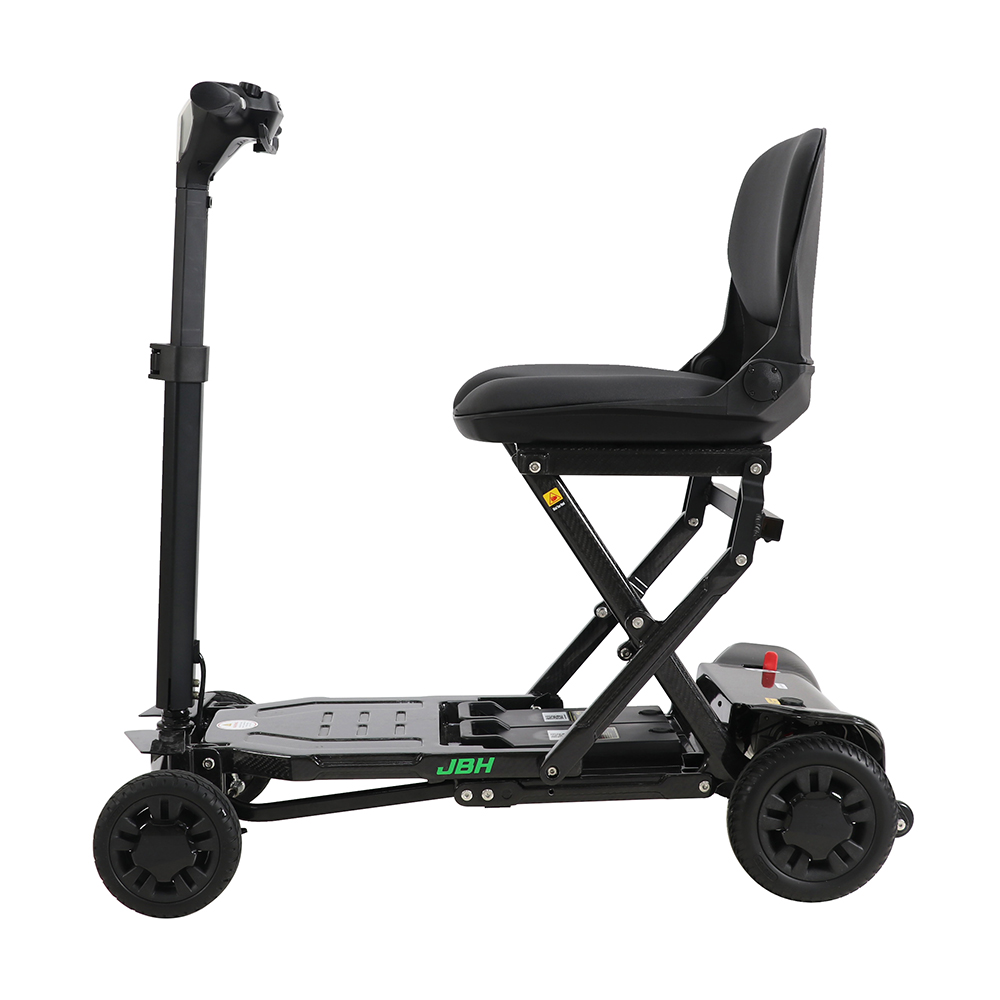
Hardware must match the use case: Ultra-lightweight models (like a Carbon Fiber Mobility Scooter) require highly optimized, efficient motor systems compared to heavy-duty, all-terrain alternatives.
You must understand the basic electrical measurements before comparing models. Voltage and wattage serve entirely different functions. They work together to determine overall performance. Evaluating these numbers correctly prevents underpowered purchases.
Think of Voltage (V) as the "pressure" of your electrical system. It pushes electrical current from the battery to the motor. The standard baseline is typically 24V for standard travel scooters. Moving to higher voltages achieves specific benefits. It allows the system to draw less current to produce the same power. This efficiency results in lower operating temperatures. It effectively prevents electrical components from overheating during long trips.
Wattage (W) represents the actual "muscle" of your device. It measures the total electrical power the motor consumes. You must differentiate between Continuous Wattage and Peak Wattage. Continuous wattage is the power the motor safely sustains during normal operation. Peak wattage is the maximum burst of power it draws on steep hills. This burst only lasts for short durations.
Electrical Specifications Comparison
Specification | Role in System | Standard Baseline | Primary Benefit of Upgrading |
|---|---|---|---|
Voltage (V) | Electrical Pressure | 24V (Travel Models) | Higher efficiency, lower operating temperatures |
Continuous Wattage (W) | Sustained Muscle | 250W - 300W | Consistent speed under heavy daily loads |
Peak Wattage (W) | Maximum Burst Power | 400W+ | Short bursts for tackling steep inclines |
Buying a higher wattage mobility scooter motor does not guarantee a faster top speed. The controller strictly regulates maximum speed for user safety. Instead, higher wattage ensures you maintain consistent speed under heavy loads. It prevents the scooter from slowing to a crawl up steep inclines. It delivers reliable torque when navigating rough surfaces like grass or gravel.
You must watch out for misleading marketing metrics. Some manufacturers only advertise "Peak Watts" to inflate performance numbers. They hide the continuous wattage rating in the fine print. A motor claiming 800W peak might only deliver 250W continuously. This discrepancy leads to severe disappointment on long hills. You must evaluate based on continuous wattage for accurate reliability forecasting. It provides the true measure of what the motor can handle daily.
The controller serves as the fundamental link between your battery and motor. Many buyers ignore it entirely. This mistake can ruin the riding experience. A powerful motor requires an equally capable controller to function properly.
The controller functions as the "brain" of your electrical architecture. It routes energy from the battery to the motor. It bases this delivery strictly on your throttle inputs. When you push the throttle slightly, the controller releases a precise trickle of power. When you demand full speed, it opens the electrical floodgates. It constantly monitors voltage and temperature to keep the system safe.
A mismatched motor and controller create severe mechanical risks. If the motor demands more power than the controller can handle, the system fails. You might experience jerky, unpredictable acceleration. You may face sudden stalls in the middle of intersections. In extreme cases, drawing excessive amps causes complete controller burnout. This leaves you stranded and requires immediate component replacement.
High-quality controllers separate premium scooters from budget alternatives. You should look for these specific features when evaluating a model:
Programmable Parameters: Advanced controllers offer adjustable acceleration curves. They prevent aggressive lurching when you first touch the throttle. They also allow customization of regenerative braking strength.
Thermal Management Features: Good controllers include integrated heat sinks. They utilize automated thermal throttling. This feature reduces power gradually if components get too hot, preventing electrical fires.
Smooth Operation Focus: Sophisticated controllers prioritize user stability over aggressive acceleration. Advanced models like the FBC01 Mobility Scooter use refined controller mapping. This mapping ensures a buttery-smooth ride in pedestrian traffic.
You must align your electrical specifications with your daily environment. Overbuying wastes battery capacity and adds unnecessary weight. Underbuying leaves you struggling on hills. You need a realistic assessment of your typical routes.
Different landscapes demand drastically different power outputs. For flat terrain and indoor use, massive power is unnecessary. Lower wattage systems ranging from 250W to 300W perform perfectly. A standard 24V architecture provides adequate torque for shopping malls and paved sidewalks. These systems offer lighter overall weight and greater maneuverability.
Hills and uneven terrain change the requirements completely. If you live in a hilly neighborhood, you need serious continuous power. Establish a strict requirement for 400W+ continuous motors. You also need robust controllers capable of sustaining high amp draws. This combination absolutely prevents terrifying mid-hill stalling.
Payload physics directly impact real-world motor performance. Manufacturers test incline ratings under specific, controlled conditions. A motor rated for a 15-degree incline at 150 lbs performs differently under a heavier load. If the user weighs 250 lbs, that same motor might stall on a 10-degree incline. You must calculate your realistic needs by adding your body weight to your typical cargo. Always leave a 20% safety margin between your total payload and the scooter's maximum capacity.
Travel scooters force a delicate trade-off between power and portability. Heavy-duty motors require heavy batteries and thick steel frames. Modern material science offers a brilliant solution to this problem. A lightweight Carbon Fiber Mobility Scooter requires significantly less raw motor torque. The ultra-light chassis eliminates dead weight. This allows a highly efficient, lower-wattage motor to achieve exceptional maneuverability. It matches the range and incline capability of a much heavier steel-framed model.
Selecting the right configuration requires honest categorization of your needs. We divide users into three distinct categories. Each category demands a different balance of voltage, wattage, and controller capability.
Frequent travelers need devices optimized for transit and aviation. They should focus exclusively on lightweight, airline-compliant setups. Massive motors are counterproductive here. Efficiency and ease of lifting are the primary goals.
Core Needs: Low physical weight, highly efficient motors, airline-safe batteries.
Example Application: Models like the FDB05 Mobility Scooter or the FDB12 Mobility Scooter. These models perfectly balance motor efficiency and battery weight. They allow for quick folding, easy transit, and highly reliable indoor navigation.
Urban commuters face varied challenges daily. They navigate curbs, ramps, pedestrian traffic, and varied pavement conditions. They need versatile machines that adapt instantly to changing environments.
Core Needs: Mid-range continuous wattage, highly responsive controllers, solid suspension.
Example Application: High-efficiency commuter models prioritize smooth controller mapping. They handle stop-and-go pedestrian traffic flawlessly. A quality Mobility Scooter in this category offers enough torque for curb cuts without being overly heavy.
Heavy-duty users demand uncompromising performance. They navigate off-road trails, steep rural hills, and carry higher payloads. Portability is secondary to raw, sustained power.
Core Needs: High-voltage systems (36V or 48V), maximum continuous wattage, reinforced transaxles.
Example Application: Large, all-terrain scooters. These machines use sophisticated thermal management to prevent overheating during long, arduous outdoor journeys.
Electrical components degrade over time. Understanding how they age helps you maximize their lifespan. Proactive maintenance prevents sudden, inconvenient failures while out in the community.
Heat is the primary enemy of electrical reliability. Constantly pushing a motor to its peak wattage generates excessive heat. In older brushed motors, this causes premature carbon brush wear. In modern brushless motors, extreme heat leads to hall-sensor failure. You must allow your system to cool down after climbing long, steep hills. Avoiding continuous peak-power operation significantly extends component life.
You should learn to recognize early warning signs of hardware distress. Catching these symptoms early prevents complete roadside breakdowns. Watch out for these specific diagnostic indicators:
Audible Clicking Sounds: Rhythmic clicking from the transaxle often indicates failing motor bearings or stripped gears.
Excessive Heat: If your controller casing runs too hot to touch comfortably, it is drawing excessive amps.
Load Stuttering: A scooter that jerks or stutters under heavy load usually suffers from voltage drops or failing controller capacitors.
Traveling with electrical devices requires strict regulatory compliance. Motor wattage itself is rarely restricted on commercial airlines. However, the batteries required to run high-wattage motors present a major hurdle. High-capacity lithium-ion batteries often violate FAA and TSA limits. Standard aviation rules cap battery capacity at 300Wh for mobility devices. Always verify your battery specifications before arriving at the airport gate.
Finding the perfect device requires looking past glossy marketing materials. The best motor is not simply the one with the highest advertised numbers. It is the one whose voltage, wattage, and controller perfectly align with your reality. You must balance these metrics against your body weight, local terrain, and daily portability needs. Making an informed choice ensures your safety and maximizes reliability.
Assess your primary use case: Determine whether you need lightweight travel capabilities or heavy-duty rough terrain performance.
Verify continuous wattage: Ignore peak wattage claims and focus purely on the motor's sustained, continuous output rating.
Check controller safety features: Ensure your shortlisted models include thermal management and smooth acceleration mapping.
Match materials to power: Remember that lightweight carbon frames require less motor torque to deliver excellent everyday performance.
A: We strongly advise against this. Upgrading the motor triggers a cascade effect. It usually requires a brand new controller to handle the higher amp draw. You will also need a larger battery and thicker wiring to prevent fires. This process is expensive, voids warranties, and remains largely impractical compared to simply buying a better-suited scooter.
A: The primary difference lies in internal friction and maintenance. Brushed motors use physical carbon brushes to conduct electricity. These brushes wear down and require periodic replacement. Brushless motors use internal magnets and electronic controllers instead. They offer significantly higher electrical efficiency, longer operating life, and much quieter daily operation.
A: Stuttering under load is a classic symptom of electrical starvation. It usually indicates a severe voltage drop in a dying battery. Alternatively, it means the controller is actively limiting electrical current. The controller does this to protect an underpowered motor from burning out while trying to push excessive weight up the incline.
A: A carbon fiber chassis drastically reduces the overall weight of the device. This reduces the dead weight the motor must physically push. Lighter weight effectively increases the scooter's real-world torque, extending its battery range and improving its incline capability. It achieves high performance without needing a larger, heavier motor.


