

Views: 0 Author: Site Editor Publish Time: 2026-06-15 Origin: Site


Standard folding wheelchairs often exact a hidden physical toll. Prolonged exposure to daily vibrations causes serious user fatigue, muscle spasticity, and joint pain. Every crack in the sidewalk transfers energy directly into the spine, turning a simple commute into an exhausting ordeal.
Transitioning from rigid frames to suspension-equipped models is a critical decision. You must balance ride comfort perfectly against portability and mechanical reliability. Upgrading your equipment requires understanding how different frame mechanics handle energy dispersal. You need practical solutions, not empty marketing promises.
This article provides an evidence-based framework for evaluating, selecting, and maintaining your next chair. We will help you navigate the market safely without falling for exaggerated "zero-impact" claims. You will learn exactly how to match suspension technologies to your daily terrain, ensuring long-term comfort and usability.
Integrated suspension systems significantly reduce vibration transfer but add an average of 3–8 lbs to the frame's overall transport weight.
The effectiveness of a shock absorbing wheelchair depends on a combination of frame material (e.g., magnesium/aluminum), tire type, and active suspension components.
Evaluating a comfort wheelchair requires matching the user's specific terrain requirements (indoor vs. mixed-outdoor) against the caregiver's ability to lift the folded unit.
High weight capacities (250–300+ lbs) require heavy-duty shock absorbers that may alter the chair's folding dimensions and turning radius.
Most manual folding wheelchairs utilize basic tubular structures. These designs prioritize manufacturing simplicity over user ergonomics. When navigating daily environments, users encounter a major functional gap regarding ride quality.
Rigid folding frames typically consist of steel or standard aircraft aluminum. These dense metals excel at supporting static weight but fail to dissipate kinetic energy. When your front wheels strike a threshold or roll across textured pavement, the impact travels upward. The kinetic energy moves directly from the casters, up the rigid fork, through the frame cross-brace, and straight into your spine. We refer to this as vibration transfer. Over a single mile of urban rolling, a standard frame subjects the body to thousands of micro-impacts. High-quality disabled mobility equipment aims to interrupt this energy transfer pathway before it reaches the seat pan.
Continuous micro-impacts over sidewalks, thresholds, and gravel lead to severe secondary discomfort. Users managing spinal cord injuries (SCI), multiple sclerosis (MS), or chronic back pain suffer the most. Excessive vibration triggers muscle spasticity, elevates fatigue levels, and aggravates nerve pain. Clinical observations suggest extended exposure to whole-body vibration decreases sitting tolerance. When sitting tolerance drops, users limit their community engagement. Reducing these micro-impacts becomes a medical necessity rather than a mere luxury feature.
Marketing materials often exaggerate suspension capabilities. A manual suspension model dampens sharp impacts and smooths sustained vibrations. It softens the "bite" of a curb drop and neutralizes the buzz of tactile paving. However, it does not replicate the completely isolated ride of heavy motorized power chairs. Power chairs utilize massive independent suspension arms and weigh hundreds of pounds. A foldable manual chair relies on lightweight dampeners. You will still feel the terrain, but the harsh, jarring spikes of energy become muted rolling waves.
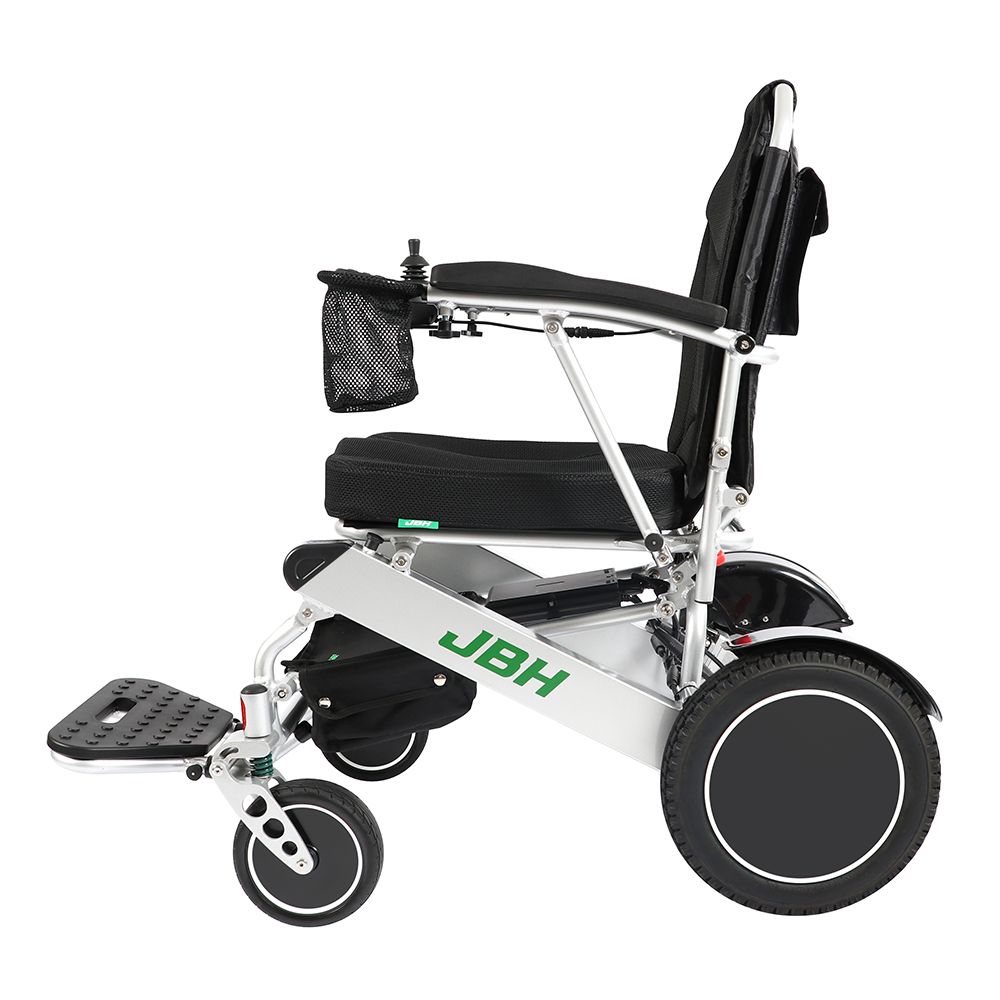
Manufacturers employ several distinct engineering approaches to isolate the user from the ground. Understanding these mechanisms helps you choose the right configuration for your specific daily routes.
Rear suspension systems target the heaviest point of impact: the rear axle below the user's center of gravity.
Mechanism: Engineers integrate steel coil springs or polyurethane dampeners (elastomers) into the rear frame geometry. These components usually sit between the seat rail and the rear wheel axle plate.
Outcome: This system absorbs drops from curbs and reduces heavy rear-impact jolts. When you tilt back to navigate a drop, the rear wheels strike the ground first. The dampeners compress, absorbing the downward force. This mechanism prevents the jarring spinal compression normally felt during urban navigation.
The front casters dictate steering and handle the initial strike against obstacles.
Mechanism: Designs feature articulating forks or integrated micro-springs hidden inside the caster housing. Some advanced models use pivoting swing-arms.
Outcome: Front suspension proves crucial for navigating uneven sidewalks. It absorbs the constant chatter of brick or cobblestone. Furthermore, it prevents caster-flutter at higher speeds. Caster-flutter occurs when wheels bounce off the ground rapidly, causing erratic steering. By keeping the wheel pinned smoothly to the pavement, a smooth ride wheelchair maintains superior tracking and safety.
Active suspension parts add weight. Material science offers an alternative approach to energy dispersal.
Mechanism: Premium chairs utilize magnesium alloys or carbon fiber woven structures in the frame design.
Outcome: These materials provide natural vibration dissipation without the mechanical complexity of moving parts. Magnesium possesses excellent dampening characteristics, absorbing high-frequency road buzz before it reaches the seat. Carbon fiber flexes directionally, smoothing the ride. This method reduces maintenance needs while keeping the chair incredibly light.
Below is a summary chart comparing these fundamental approaches:
Suspension Type | Primary Component | Main Benefit | Best Application |
|---|---|---|---|
Rear Frame | Coil springs / Elastomers | Absorbs large drops and heavy jolts | Urban commuting, curb drops |
Front Caster | Articulating forks | Prevents flutter, smooths chatter | Cobblestones, cracked sidewalks |
Material Dampening | Magnesium / Carbon Fiber | Reduces high-frequency buzz | Lightweight travel, smooth paths |
Selecting the optimal model involves navigating distinct trade-offs. You must weigh daily functional comfort against transport logistics and mechanical efficiency.
You must contrast the structural weight of shock absorbers against the necessity of loading the folded chair into vehicle trunks. Active suspension systems add metal housings, heavy springs, and reinforced pivot points. This often increases the frame weight by several pounds. If a caregiver struggles to lift 30 pounds, adding a 5-pound suspension module creates a daily transport barrier. To mitigate this added weight, assess the viability of quick-release wheels. Removing the large rear wheels before lifting drops the transport weight significantly, making heavy-duty frames manageable for trunk loading.
A folding chair relies on a cross-brace mechanism to collapse sideways. You must analyze how cross-brace designs interact with active suspension. Poorly engineered folding mechanisms suffer from lateral flex. When you push the hand-rims, frame torsion absorbs your forward momentum. This wasted propulsion energy makes the chair feel sluggish. High-quality designs reinforce the X-brace pivot points to ensure the frame remains rigid horizontally while allowing vertical suspension travel. Always prioritize tightly machined folding joints over excessive suspension travel.
Tire selection directly impacts suspension effectiveness.
Solid Tires: Puncture-proof polyurethane tires never go flat. Combining solid tires paired with suspension offers a reliable, maintenance-free compromise. The frame dampeners handle the impacts while the tires guarantee zero maintenance.
Pneumatic Tires: Air-filled tires act as a first line of defense against vibration. Combining pneumatic tires alongside active suspension provides maximum comfort. The air pressure absorbs micro-vibrations, leaving the mechanical springs to handle larger impacts.
Frame geometry must support the user safely. Heavy-duty capacities spanning 250 lbs to over 300 lbs demand specific structural requirements. Standard springs bottom out under high payloads, rendering them useless. You must explain your exact weight requirements to vendors. Shock tension must correlate closely with user weight to prevent "bottoming out" or experiencing an overly rigid ride. A 120-lb user needs soft elastomers, whereas a 280-lb user requires high-tension steel coils to maintain adequate suspension travel.
Owning complex mobility equipment demands proactive care. Suspension introduces moving parts, which inherently creates new maintenance realities.
Mechanical parts degrade over time. Springs lose their tension, and elastomer dampeners dry out or crack. You must perform periodic inspections for squeaking, stiffness, or outright failure. A squeaky rear shock often indicates metal-on-metal friction due to worn bushings. Elastomers exposed to extreme temperature fluctuations degrade faster. Plan to inspect your frame pivot points monthly. Lubricate articulating caster forks according to manufacturer guidelines to ensure steering remains fluid.
Manufacturers frequently use "All-Terrain" marketing loosely. You must define realistic boundaries. A foldable shock absorption chair handles grass, compact gravel, and cracked pavement beautifully. It empowers users to navigate local parks and unpaved driveways safely. However, it remains unsuitable for deep sand, thick mud, or extreme off-road trails. The small front casters will dig into soft ground regardless of suspension quality. Pushing a manual chair through deep sand requires specialized balloon tires, not just heavy-duty dampeners.
You must consider the "squish" factor. Action creates an equal and opposite reaction. When you push the hand-rims forcefully, your body pushes down into the seat. Overly soft suspension can absorb the user's pushing energy, compressing downward instead of rolling forward. This makes self-propulsion slightly more taxing compared to a fully rigid frame. Active independent users often prefer adjustable dampeners. You can stiffen the suspension for long urban pushes and soften it for off-road maneuvering.
Navigating the complex market requires a methodical approach. Follow these four steps to eliminate poor choices and identify the exact model matching your lifestyle.
Step 1: Map the Primary Environment. Categorize your daily routes carefully. Do you primarily navigate smooth indoor surfaces like shopping malls and clinics? Do you face mixed urban terrain full of curb cuts and tactile paving? Or do you require rural outdoor use involving dirt paths? High-level suspension serves urban and rural users best, whereas indoor users benefit more from lightweight rigid frames.
Step 2: Define Transport Requirements. Establish hard limits for the folded weight based strictly on the physical capabilities of the user or caregiver. Weigh your current chair and determine the maximum acceptable increase. If trunk lifting occurs daily, cap your frame transport weight ruthlessly. A chair sitting unused in the trunk serves no one.
Step 3: Determine User Propulsion vs. Caregiver Assistance. Evaluate who provides the forward momentum. If self-propelled, prioritize rigid-folding frames featuring lightweight magnesium components to maximize push efficiency. If caregiver-pushed, propulsion efficiency matters less. Caregivers benefit when you prioritize heavier rear-coil suspension models, ensuring maximum passenger comfort over rough terrain.
Step 4: Warranty and Part Availability. Complex mechanisms require long-term support. Emphasize the importance of selecting brands offering accessible replacement parts. Custom casters, specific elastomers, and proprietary folding joints break eventually. Ensure the vendor stocks domestic replacement parts to avoid being grounded for months awaiting overseas shipping.
Following this precise logic ensures your comfort wheelchair matches both your medical requirements and your daily logistical reality.
Upgrading your mobility equipment involves deliberate calculations. Transitioning to a shock absorbing wheelchair represents a calculated compromise between enhanced daily physical comfort and the practicalities of transport weight. You must accept a slight increase in lifting difficulty to achieve significant reductions in spinal fatigue and joint pain.
We encourage buyers to prioritize established brands offering transparent technical specifications. Look for companies providing clear payload data, verifiable frame weights stripped of accessories, and realistic terrain ratings. Avoid generic aesthetic claims promising effortless all-terrain mastery. By matching suspension types to your specific environment and maintaining the moving parts diligently, you will secure a smoother, healthier daily ride.
A: Yes, integrated suspension components add weight. On average, heavy-duty springs, dampeners, and reinforced pivot joints add 3 to 8 lbs to the overall frame. You can mitigate this transport weight by selecting models featuring quick-release rear wheels, allowing you to lift the frame in lighter sections.
A: Absolutely. While pneumatic tires provide the softest ride, combining solid, puncture-proof tires with a dampened frame creates an excellent synergy. The active suspension absorbs the primary terrain impacts, allowing you to enjoy a smooth ride while eliminating the risk of flat tires and routine air maintenance.
A: Realistic maintenance timelines depend heavily on usage and terrain severity. Daily urban users should expect to replace polyurethane elastomers every 12 to 18 months, as they dry out and compress. Metal coil springs generally last 3 to 5 years but require routine inspection for squeaking or tension loss.
A: It can. Soft suspension systems suffer from the "squish" factor, where some of your pushing energy compresses the springs rather than propelling the chair forward. To minimize this kinetic energy loss, select chairs utilizing adjustable dampeners or stiffer elastomers tailored specifically to your body weight.


