

Views: 0 Author: Site Editor Publish Time: 2026-07-10 Origin: Site


Navigating daily mobility often feels like choosing between physical exhaustion and logistical nightmares. Finding the perfect balance between necessary motorized support and transport reality remains a major challenge. Many users experience severe shoulder and arm fatigue relying purely on manual chairs. Yet, they cannot transition to full-size, non-folding electric models. Tight home spaces and vehicle trunk constraints make large chairs impossible to manage. You need practical solutions, not just glossy marketing promises. This comprehensive guide cuts straight through the noise. We focus entirely on structural integrity, realistic usability, and essential procurement criteria for daily operation. You will learn how to evaluate true lifting weights, navigate strict battery compliance rules, and select the best frame design. By prioritizing real-world logistics over flashy features, you can confidently select a foldable power-assist wheelchair to reclaim your independence.
A true foldable power-assist wheelchair must balance total assembled weight with the physical capacity of the user or caregiver to lift it into a vehicle.
Battery compliance (e.g., FAA/TSA approval) and real-world range are critical limiters for active, everyday users.
Integrated folding models offer convenience, while modular add-ons provide flexibility for existing manual frames.
For commercial buyers and distributors, evaluating an OEM power-assist wheelchair requires prioritizing component availability and warranty infrastructure over superficial design features.
Understanding frame construction is your first critical step. The market offers two distinct paths for portable power-assist mobility. You must choose between integrated folding power chairs and modular power-assist add-ons. Each approach drastically changes daily usability, transport logic, and maintenance routines.
Manufacturers design these frames specifically around an electric propulsion system. They typically fold using a robust scissor-mechanism or a central frame hinge. You operate them as a single, cohesive unit.
Pros: They deliver seamless operation. You get centralized charging systems. Intuitive joystick controls make daily navigation highly responsive. Users enjoy a unified driving experience.
Cons: They carry a heavier baseline lifting weight. You usually cannot separate the motor weight from the main frame during transport. This makes lifting them into a car trunk more physically demanding.
These devices consist of motorized wheels or rear-mounted drive units. You attach them directly to standard folding manual chairs. They transform traditional chairs into powered vehicles temporarily.
Pros: You can retain your highly customized seating systems. Caregivers can detach the heavy components before transport. This significantly reduces the immediate lifting weight.
Cons: You need adequate physical dexterity to attach and detach the units daily. These systems also potentially alter the chair's center of gravity. This shift can affect stability on uneven ground.
Mobility Format | Ideal User Profile | Primary Limitation |
|---|---|---|
Integrated Folding Chair | Users needing full joystick control and single-unit convenience. | Heavier single-piece lifting requirement for vehicles. |
Modular Add-On | Users with custom manual chairs needing occasional power boosts. | Requires daily assembly and disassembly dexterity. |
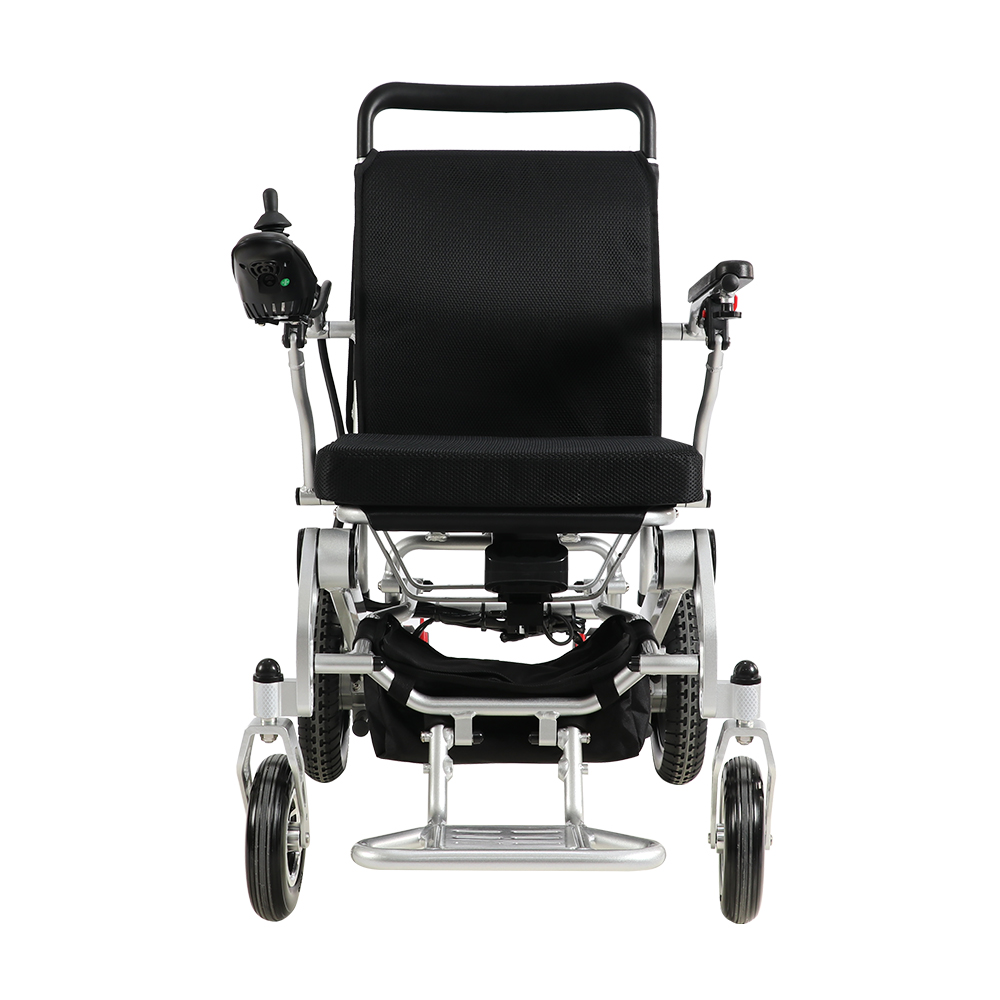
Selecting the right electric power-assist chair requires looking past basic brochures. You must scrutinize specific engineering metrics. These dimensions dictate whether a chair actually improves your daily life or creates new logistical hurdles.
Marketing materials often highlight an artificially low weight. You must differentiate between "curb weight" and "transport weight." Curb weight includes the fully assembled chair ready to drive. Transport weight reflects the chair after you remove batteries, footrests, and cushions. A 55-pound curb weight might drop to a manageable 38-pound transport weight. You should establish realistic lifting thresholds based on your caregiver's actual strength. Most standard car trunks require lifting the folded chair at least 30 inches off the ground.
Power sources dictate both range and travel freedom. You will generally encounter Lithium-ion and SLA (Sealed Lead Acid) batteries. Lithium-ion offers superior energy density. It provides longer range per pound. SLA batteries cost less but weigh significantly more. If you plan to fly, battery compliance is non-negotiable. You must ensure the Lithium-ion battery possesses UN38.3 certification. The Federal Aviation Administration (FAA) strictly limits batteries to under 300 Watt-hours (Wh) for cabin transport. Always verify this specific Wh rating before purchasing a travel-oriented chair.
Outdoor speed matters little if you cannot navigate your own bathroom. The wheelbase and drive configuration heavily impact indoor maneuverability. Rear-wheel assist setups push the chair from the back. They offer great outdoor tracking but wider turning circles. Mid-wheel configurations turn on their own axis. They provide exceptional maneuverability in tight standard hallways. ADA-compliant bathrooms require a 60-inch clear turning space. You must ensure your chosen model can fully rotate within this specific perimeter.
Engineers primarily build modern folding frames from aircraft-grade aluminum or carbon fiber. Aircraft-grade aluminum (like 6061 alloy) remains highly cost-effective. It offers excellent durability and structural rigidity. Carbon fiber presents an ultra-lightweight alternative. It drastically reduces lifting weight. However, carbon fiber costs much more. It also exhibits different impact absorption profiles. Aluminum bends under severe stress, while carbon fiber can crack. You must weigh these material traits against your daily usage environment.
Frame Material | Weight Profile | Durability Trait |
|---|---|---|
Aircraft-Grade Aluminum | Moderate to Light | High impact resistance; tends to dent rather than break. |
Carbon Fiber | Ultra-Lightweight | Excellent fatigue resistance; susceptible to hard point-impact cracks. |
Owning a compact power-assist wheelchair introduces unique daily challenges. These devices endure different stress profiles compared to rigid hospital chairs. You must anticipate specific maintenance needs to prevent unexpected breakdowns.
Daily vehicle transport subjects folding chairs to severe physical wear. Caregivers often drop the chair slightly when clearing a high trunk bumper. This repetitive impact stresses the folding joints. Over time, the scissor mechanisms or central hinges can loosen. You must regularly inspect these pivot points. Tightening loose bolts prevents frame warping and maintains structural alignment.
Compact chairs prioritize tight indoor turns. Consequently, engineers equip them with smaller caster wheels. These small front wheels limit outdoor efficacy. They easily sink into soft ground like thick grass or loose gravel. They also struggle on steep inclines compared to full-size power chairs. You must realistic assess your typical outdoor routes. If you frequently navigate rough trails, a folding compact model will likely underperform.
Frequent folding cycles create specific failure points. You must watch wiring harnesses carefully. Wires routed near folding hinges often pinch or fray over time. Joystick connectors endure constant plugging and unplugging. They can develop loose internal contacts. Caster bearings collect hair and street debris. You must clean these bearings monthly to ensure smooth, predictable steering.
Everyday exposure to rain or snow threatens electrical systems. You must check the IP (Ingress Protection) ratings for the motors and controllers. An IP54 rating indicates good protection against splashing water from any direction. However, these chairs are rarely fully waterproof. You should always cover the joystick assembly during heavy downpours. Dry the electrical connections thoroughly before charging the unit.
B2B buyers, clinical distributors, and healthcare facilities face higher stakes. Procuring an OEM power-assist wheelchair fleet demands strict vendor vetting. You cannot rely purely on bulk pricing. You must prioritize supply chain health and regulatory safety.
You must evaluate the manufacturer’s internal supply chain. Reliable mobility devices depend on proven electrical components. Look for sourcing transparency regarding motors and controllers. Industry-standard components from companies like PG Drives or Linix indicate robust engineering. Avoid proprietary, unbranded controllers. They often become obsolete quickly. Transparent sourcing ensures your fleet remains operational for years.
A low upfront OEM cost means nothing without domestic parts availability. You must assess the manufacturer's warranty infrastructure. If replacement joysticks or battery packs have a six-week lead time, your clients suffer. Ensure the vendor maintains domestic warehousing for critical spares. Fast turnaround times on warranty claims dictate long-term fleet success.
Medical device compliance protects both your business and the end-user. In the United States, you must ensure the manufacturer meets FDA Class II medical device standards. For European markets, demand CE MDR compliance. These certifications prove the facility follows strict Quality Management Systems, such as ISO 13485. Non-compliant chairs expose distributors to massive liability risks.
Transitioning from research to purchase requires a structured approach. Avoid buying a chair based solely on online reviews. You need a personalized evaluation strategy. Follow these distinct steps to guarantee a successful match.
Step 1: Environmental Audit. Measure your daily environment accurately. Record your exact vehicle trunk dimensions. Measure your narrowest home doorway width. Calculate your typical daily travel distances. You will use these hard numbers to filter out incompatible chair models immediately.
Step 2: Physical Assessment. Consult directly with an Assistive Technology Professional (ATP) or a physical therapist. They will ensure the folding mechanism matches your physical capabilities. They evaluate your caregiver's actual grip strength and safe lifting capacity. This prevents injuries during daily transport.
Step 3: Demo and Trial. Clinical trials or in-home demonstrations remain non-negotiable before finalizing any purchase. You must drive the chair across your actual daily surfaces. Test it on your plush living room carpets. Drive it up your specific driveway inclines. Only real-world testing reveals hidden maneuverability issues.
Selecting the ideal foldable power-assist mobility solution requires pragmatic thinking. You must look past top speeds and theoretical maximum ranges. Instead, prioritize your daily logistical realities. Assess how easily you can lift the frame. Verify where you will charge the battery. Confirm the folded unit actually fits inside your primary vehicle. Frame materials, battery compliance, and turning radii dictate true usability.
Take immediate action to secure your mobility independence. Schedule a formal evaluation with a certified Assistive Technology Professional today. Request an in-home trial from a specialized, reputable dealer. Cross-reference their exact product specification sheets against the environmental audit you conducted. By demanding structural integrity and reliable component support, you ensure a safe, lasting mobility investment.
A: Coverage depends heavily on strict medical necessity criteria. Medicare primarily evaluates your "in-the-home" mobility requirements. If you can complete daily living activities (like reaching the bathroom) using a manual chair, they typically deny power-assist claims. You must meet specific coding classifications and provide robust physician documentation proving a manual chair is insufficient for indoor home use.
A: Yes, but you must follow strict airline regulations. The FAA limits lithium-ion wheelchair batteries to a maximum of 300 Watt-hours (Wh). You must isolate the battery and protect the joystick during gate check. Most airlines require you to bring the battery into the passenger cabin. Always notify the airline 48 hours before departure.
A: Manufacturer claims often highlight ideal conditions, boasting 15-mile ranges. Real-world yields are typically closer to 8-10 miles per charge. Actual battery longevity depends heavily on user weight, frequent stops, outdoor temperatures, and steep inclines. Lithium-ion batteries generally require total replacement every two to three years under daily usage.
A: It depends entirely on your priorities. Modular devices allow you to keep your custom-fitted manual chair. They are excellent if you only need occasional power. Integrated folding chairs provide superior convenience for full-time power users. They offer an all-in-one system without the hassle of daily assembly, though they require lifting a heavier single unit.


