

Views: 0 Author: Site Editor Publish Time: 2026-07-08 Origin: Site


Daily mobility solutions often force a frustrating compromise. We typically must choose between structural durability and ease of transport. Standard aluminum chairs offer robust strength. However, they become incredibly cumbersome during daily vehicle transfers. Lifting a heavy metal frame into a car trunk quickly exhausts users and caregivers alike. Conversely, ultra-light plastics reduce this lifting burden. Unfortunately, they lack long-term structural longevity. They tend to flex, warp, or crack under continuous daily stress.
Carbon fiber composites beautifully bridge this persistent gap. They offer superior strength-to-weight ratios previously reserved for aerospace applications. This advanced material drastically reduces physical strain. However, this technology comes at a premium price point. You must evaluate these devices carefully to ensure genuine value. This article provides a clear, metric-driven evaluation framework. We focus on structural integrity, strict travel compliance, and practical daily utility. You will learn how to assess these advanced mobility tools accurately. We aim to guide your final purchase decision with objective, evidence-based criteria.
Carbon fiber reduces overall frame weight by up to 30% compared to standard aerospace aluminum, without sacrificing payload capacity.
Airline travel requires strict adherence to FAA/IATA battery regulations; a true portable wheelchair must feature certified, quick-release battery systems.
Evaluating an OEM carbon fiber wheelchair or direct-to-consumer model requires verifying frame warranty, hinge durability, and long-term part availability.
The primary ROI of a lightweight electric wheelchair is measured in reduced caregiver fatigue and expanded independent travel capabilities.
Carbon fiber is not merely a marketing buzzword. It relies on advanced material science principles. Manufacturers utilize it primarily for its immense tensile strength. Standard aluminum is isotropic, meaning it exhibits uniform strength in all directions. Carbon fiber is anisotropic. Engineers can strategically orient the carbon weaves. They place maximum strength exactly where the frame experiences the highest torque. This targeted reinforcement creates an incredibly rigid structure. It safely supports heavy loads while eliminating unnecessary bulk.
Vibration dampening is a critical, often overlooked benefit. Carbon fiber naturally absorbs micro-impacts much better than aluminum. When you traverse rough pavement or gravel, the frame flexes microscopically. It dissipates kinetic energy before it reaches your body. Aluminum frames transfer these harsh vibrations directly to the user. Over prolonged daily use, constant vibration causes severe muscle fatigue. It also increases joint discomfort. A composite frame reduces this physical toll significantly. We observe distinct improvements in user comfort during long transit days.
A foldable frame relies entirely on its joints. Hinges represent inherent structural vulnerabilities. You must inspect the folding cross-braces carefully. The locking mechanisms must distribute stress evenly across the frame. Poorly designed pivot points cause localized stress fractures. Reputable manufacturers understand this risk deeply. They reinforce crucial pivot areas extensively. They often use aircraft-grade aluminum hardware at the actual hinge points. This hybrid approach prevents the carbon fiber from grinding against itself.
We must also discuss impact resistance candidly. Carbon fiber is highly susceptible to blunt-force trauma. Sharp strikes can shatter the internal epoxy resin matrix. A standard aluminum chair might simply dent upon hitting a doorframe. Carbon fiber could splinter under extreme, localized force. High-quality designs mitigate this specific risk. They add protective bumper guards near the footrests. They thicken the composite weave around the rear wheels. You should always look for these protective reinforcements.
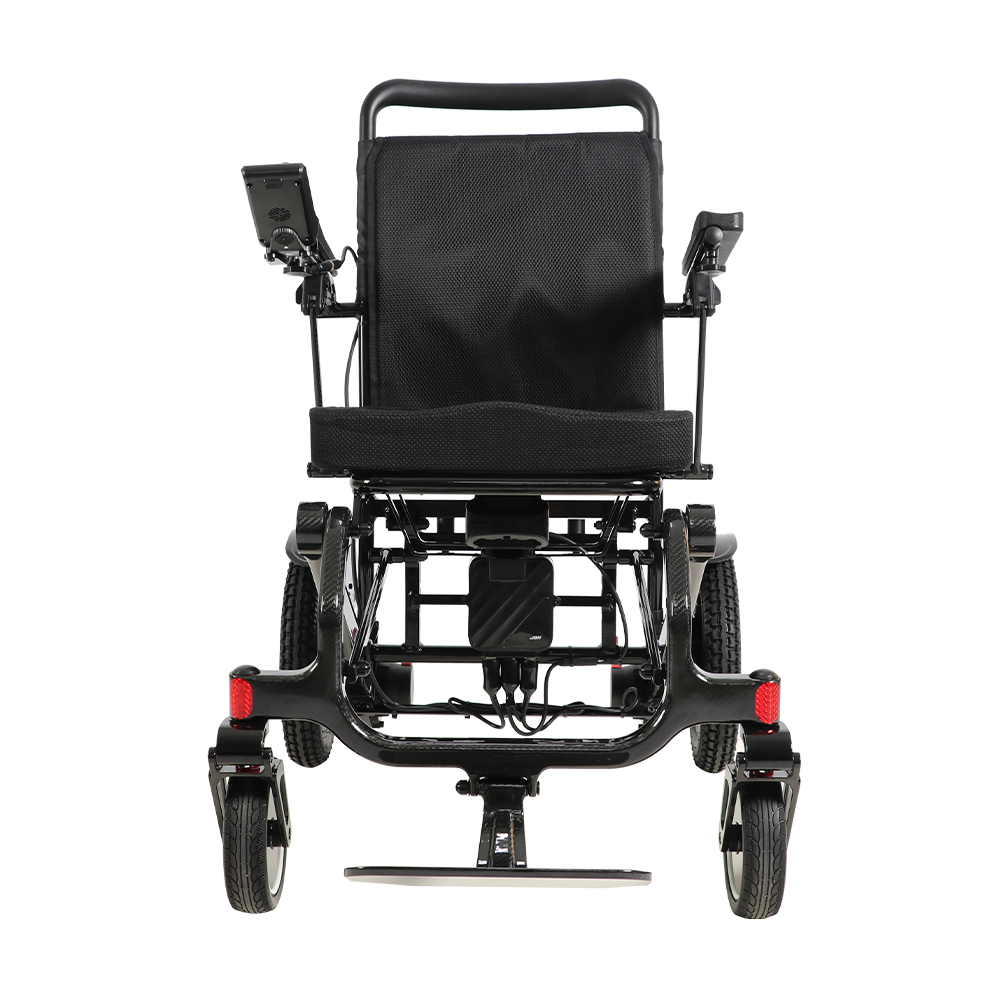
Evaluating a lightweight foldable carbon fiber wheelchair demands strict attention to metrics. You cannot base a purchase on aesthetic appeal. Start by examining the weight-to-payload ratio. A competitive lightweight model establishes a clear baseline. It should weigh between 30 and 45 pounds. This weight measurement must include the internal battery modules. Despite this low weight, the frame should support 250 pounds or more. Achieving this ratio indicates superior engineering.
You must assess the motor technology next. Brushless dual motors are an absolute requirement for modern chairs. They operate much quieter than standard brushed motors. They also contain fewer moving friction parts. This eliminates the need to replace worn carbon brushes over time. They run cooler and conserve precious battery life.
Look closely at battery capacity metrics. Manufacturers measure this in amp-hours (Ah) or watt-hours (Wh). Map these capacity numbers to your realistic daily travel expectations. Advertised ranges represent optimal, laboratory-like conditions. Real-world variables alter these numbers drastically. User weight dictates how hard the motors work. Incline grades drain lithium-ion cells rapidly. Even cold weather reduces battery efficiency. Always assume your realistic range is roughly 20% lower than the marketing claims.
Ergonomics play a massive role in daily utility. Consider standard folded dimension benchmarks. You need the chair to fit easily into a compact car trunk. It must slide into standard ride-share vehicles without a struggle. Typical folded dimensions should hover around 30 inches by 24 inches by 15 inches. Anything larger defeats the purpose of a travel-friendly device.
Inspect the lifting points carefully. Caregivers need secure, ergonomic handholds to lift the folded unit. Carbon tubing can be quite smooth and slippery. Well-placed grip zones prevent catastrophic drops during transport. The center of gravity must feel balanced when folded. A poorly balanced frame strains the lower back during trunk loading.
Air travel requires strict adherence to international regulations. The FAA and IATA set hard limits on battery transport. Lithium-ion batteries must generally remain under 300Wh for commercial flights. Security personnel will reject anything larger at the boarding gate. Some airlines permit two smaller batteries up to 160Wh each. You must request specific documentation before your purchase.
Ask the seller for a UN38.3 certification document. This paperwork proves the battery passed critical thermal and vibration safety tests. Keep a physical copy in your carry-on bag always. Gate agents frequently ask to see this specific certification. Without it, you risk leaving your mobility device behind.
Transit portability extends far beyond airplanes. You will navigate non-compliant spaces constantly. Legacy infrastructure poses distinct daily challenges. Older cruise ship hallways are notoriously narrow. Many historic buildings feature non-ADA compliant doorways. Standard doors might only offer 24 inches of clearance.
A true portable carbon fiber wheelchair excels in these tight environments. Turning radius is a vital performance metric here. A turning radius under 33 inches allows for tight, efficient spins. Joystick precision also matters immensely. You need highly responsive controls in cramped quarters. A sluggish or jumpy joystick causes frustrating collisions. Test the responsiveness on the lowest speed setting. The chair should crawl smoothly without any jerking motions.
Finding a reliable supplier requires diligent research. This advice applies to B2B distributors and discerning B2C buyers alike. You must thoroughly vet the manufacturer's credentials. Ask them directly about their ISO certifications. Look specifically for ISO 13485 compliance. This standard governs medical device quality management systems. Verify their FDA or CE medical device registrations online.
Purchasing an unregistered OEM carbon fiber wheelchair poses severe safety and legal risks. Legitimate factories proudly display their regulatory certificates. White-label dropshippers often obscure this information. Demand transparency before wiring any funds.
Aftermarket support is incredibly critical. Niche mobility devices frequently utilize proprietary electronic parts. This creates a significant right-to-repair hurdle. You must evaluate replacement part availability beforehand. Can you easily purchase new polyurethane tires? Is a replacement joystick controller readily in stock?
Battery modules degrade over several years inevitably. Ensure you can purchase spare battery packs directly from the source. A lightweight chair becomes useless if you cannot find replacement parts. Ask the vendor for a spare parts catalog.
We must also examine common warranty traps. Read the fine print of the purchasing contract carefully. Break down the standard warranties completely. Companies usually separate the structural frame from the electrical components. The carbon frame might carry a generous five-year guarantee. However, motors, joysticks, and batteries might only get one year of coverage.
Pay close attention to the definition of "normal wear and tear." Surface scratches on a composite frame are normal. Deep gouges exposing raw carbon fibers are not. Know exactly what scenarios void the warranty entirely. Water damage usually voids electrical warranties immediately.
You face a noticeable upfront premium when selecting carbon fiber. You must weigh this cost against your daily utility needs. We use a straightforward framework to guide this decision. Carbon fiber saves roughly 10 to 15 pounds over standard aluminum frames. Does this specific weight reduction justify a 30% to 50% price increase?
If you or your caregiver lift the chair daily, yes. The long-term relief on the human spine is invaluable. It prevents chronic lifting injuries. If you rarely transport the chair in a vehicle, the premium might not make sense. You pay primarily for the ease of transport.
Sometimes, alternative materials make more objective sense. A standard aluminum lightweight electric wheelchair might fit your lifestyle better. Choose aluminum if you frequently traverse rough, rocky, off-road trails. Aluminum bends and dents before it breaks. It handles harsh impacts better than brittle composites.
Choose aluminum if you face strict budget constraints. It provides excellent, reliable functionality at a significantly lower cost. Carbon fiber remains a highly targeted tool. It serves frequent travelers and those managing strict lifting limits.
Let us review a quick comparison chart to clarify these differences.
Evaluation Metric | Carbon Fiber Models | Standard Aerospace Aluminum Models |
|---|---|---|
Average Frame Weight | 30 - 35 lbs (excluding battery) | 45 - 55 lbs (excluding battery) |
Price Bracket | Premium Investment | Standard Cost |
Vibration Dampening | Excellent (absorbs micro-shocks) | Moderate (transfers more vibration) |
Impact Behavior | May splinter under extreme localized force | Dents or bends upon blunt impact |
Ideal User Scenario | Frequent airline travel, daily trunk lifting | Budget-conscious buyers, heavy outdoor usage |
Follow this checklist before finalizing any transaction:
Measure the exact dimensions of your primary vehicle's trunk using a tape measure.
Verify the exact weight of the heaviest lifting piece with the batteries completely removed.
Request the battery Material Safety Data Sheet (MSDS) from the seller for airline pre-clearance.
Confirm the seat width and depth accommodate your specific ergonomic needs.
Check the return policy for restocking fees in case the device does not fit.
Purchasing foldable carbon fiber mobility equipment is a profound lifestyle choice. It serves as a direct investment in your sustained independence. It acts as a primary defense against chronic caregiver fatigue. The underlying material science offers genuine, tangible physical benefits. You gain structural strength while shedding unnecessary lifting weight.
The optimal choice requires balancing several critical factors. You must verify airline compliance independently before flying. You need verifiable payload data directly from the manufacturer. You also require guaranteed aftermarket support for long-term repairs. Never choose a mobility model based on superficial aesthetics alone. Prioritize robust structural integrity and reliable electronics above all else. By applying this analytical framework, you ensure a safe, lasting mobility solution. You are now fully equipped to make a confident, informed purchase.
A: No. This is a common myth. Engineers use directional layup techniques to maximize tensile strength. The material is highly resistant to standard weight and torque. However, it remains vulnerable to sharp, high-velocity blunt impacts. Regular daily rolling will not crack it.
A: Yes. Most modern dual motors feature a freewheel or neutral lever. When you disengage these levers, the electromagnetic brakes release. This allows a caregiver to push the chair manually if the battery dies unexpectedly.
A: No. The frame material is irrelevant to the FAA. Flight compliance depends entirely on the lithium-ion battery capacity. The battery must be removable and typically under 300Wh. Always verify the specific battery watt-hours.
A: With proper care, a carbon fiber frame can easily outlast aluminum. It does not fatigue, oxidize, or corrode in the same way metal does. Avoid deep scratches that compromise the epoxy resin. Many reputable brands offer a 3-to-5-year or lifetime frame warranty.


