

Views: 0 Author: Site Editor Publish Time: 2026-09-21 Origin: Site


Every single day, active users perform thousands of repetitive push strokes. You must stop viewing the wheelchair handrim as a basic accessory. Instead, treat it as the critical biomechanical interface. It links your physical effort directly to your mobility equipment. Poorly matched handrims cause severe, compounding physiological problems. They lead to massive propulsion inefficiency. You experience premature fatigue long before your day ends. Over time, you risk debilitating upper extremity overuse injuries. These include painful Carpal Tunnel Syndrome and severe rotator cuff tears. These injuries ultimately strip away your daily independence.
Upgrading your equipment changes this trajectory entirely. You must base your choices on objective ergonomic and grip criteria. This approach offers a scientifically validated method to reduce daily joint strain. Proper equipment choices also maximize your overall mobility efficiency. You will learn exactly how biomechanics shape your daily propulsion. We will explore various solution categories and essential evaluation metrics. This comprehensive guide helps you make smart, clinically sound mobility choices.
Biomechanical Impact: Ergonomic shapes increase surface area contact, reducing localized pressure on the hands and wrists.
Friction vs. Glide Trade-off: Handrim material selection requires balancing push-phase grip with braking-phase thermal friction.
Targeted Upgrades: Standard round-tube aluminum rims are insufficient for long-term daily use; users should evaluate anatomical contours or high-friction coatings based on their specific mobility goals and hand function.
System Integration: Handrim benefits are maximized only when paired with a properly configured lightweight manual wheelchair.
The human shoulder and wrist never evolved for continuous load-bearing tasks. Standard round-tube rims take a heavy physical toll on these joints. A traditional grip forces the hand into highly unnatural positions. You often push in a non-neutral wrist posture. This involves extreme extension and ulnar deviation. Repetitive strain quickly degrades your delicate joint health. Tendons inflame and cause micro-tears across your upper extremities. Every push cycle compounds this anatomical stress. Your body absorbs the shock rather than the wheel.
Low-friction surfaces cause continuous micro-slippage. This slippage happens exactly during the crucial push phase. You automatically compensate by applying a much tighter grip force. Unfortunately, this rigid grip wastes valuable kinetic energy. You work significantly harder just to maintain basic forward momentum. Energy transfer loss means your muscles tire out faster. When using a standard Manual Wheelchair, this inefficiency forces you to push more frequently. You lose the glide effect completely. The mechanical disadvantage works against your natural physiology.
Standard clinical consensus paints a very clear picture. Medical professionals observe distinct patterns of injury among active users. Prolonged use of poorly fitted rims leads directly to joint degeneration. Clinicians link this equipment directly to median nerve compression. It also causes chronic, stabbing shoulder pain. You must prioritize anatomical alignment above all else. Proper alignment reduces the sheer forces acting on your cartilage. Ignoring these biomechanical realities guarantees future chronic pain. Your upper extremity health dictates your long-term independence.
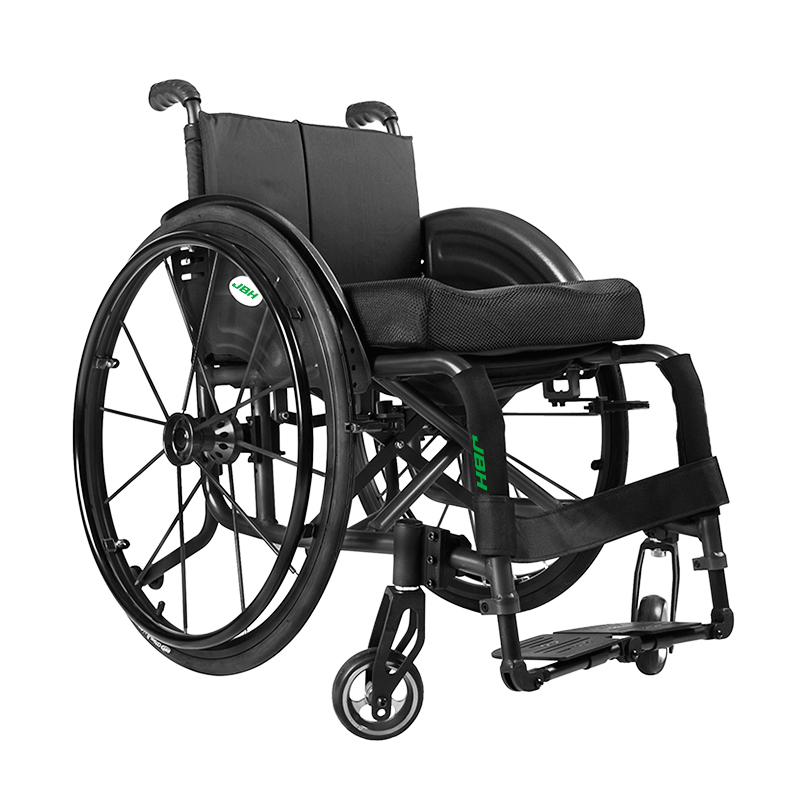
The standard round tube profile features traditional anodized aluminum or basic titanium. Manufacturers include these heavily on entry-level mobility models. They offer a very low production cost. The profile remains perfectly cylindrical.
These models work best for minimalist users. They suit individuals who have fully intact hand function. They also appeal to those who prioritize minimal weight above all else. However, they lack advanced pressure dispersion capabilities. You will feel every ounce of pressure concentrated on a tiny strip of your palm. They offer no structural support for the thumb or the heel of the hand.
Provide minimal grip friction in wet weather conditions.
Require a tight, closed-fist grip for effective propulsion.
Weigh less than heavily coated or contoured alternatives.
The ergonomic profile uses specialized oval or teardrop shapes. Designers match them perfectly to the natural arch of a closed hand. They feature a wider top surface and a contoured thumb cradle. This design physically mimics the resting state of human fingers.
These options excel as pain-relieving interventions. They increase the surface contact area dramatically. They disperse pressure evenly across the entire palm. They allow for a relaxed, highly neutral wrist angle. By filling the gap inside your palm, they reduce tendon strain. Your fingers no longer need to pinch the metal tightly. You push using the larger muscles of your forearm and shoulder safely.
Reduce localized pressure spikes on the carpal tunnel.
Enhance pushing comfort during long distance travel.
Prevent finger cramping and hand fatigue effectively.
This profile includes thick vinyl, silicone, or rubber-coated rims. Some advanced models embed dedicated grip strips directly into the metal. The coating fundamentally alters the surface tension. It turns a slippery metal ring into a tacky propulsion surface.
These work best for users navigating severely impaired grip strength. For example, individuals navigating quadriplegia benefit greatly. These designs eliminate the need for a closed-fist grip entirely. You rely entirely on pure palm friction for forward propulsion. You simply press your palm against the tacky surface and push forward. The material grips your skin or glove securely.
Maximize forward energy transfer without requiring finger mobility.
Perform well indoors on carpet or smooth tile surfaces.
Can generate significant heat during sustained downhill braking.
You must evaluate the friction paradox carefully. High grip obviously improves forward propulsion. However, it can cause severe friction burns during rapid downhill braking. You squeeze the rim to stop, and the high-friction surface bites back. Solutions exist to fix this exact problem. Innovative dual-surface rims place high friction on the top edge. They leave the side surfaces completely smooth. You push using the top friction strip. You brake using the smooth side metal. This hybrid approach balances performance safely.
Assess how heavier ergonomic rims impact your total setup. Specialized designs often increase rotational mass. Transparent assumption: We gladly accept a slight weight increase. You offset this minor weight penalty easily. The drastic improvement in biomechanical efficiency outweighs a few extra ounces. The wheel might weigh slightly more, but it rolls much easier. Your body feels less fatigue despite the heavier component. Weight alone does not determine your final propulsion efficiency.
Your equipment must scale appropriately to your lifestyle. We divide use cases into distinct categories to guide selection:
Everyday Mobility: Requires extreme durability against harsh weather. The coating must survive daily impacts against doorways. It must resist UV degradation from sunlight.
Athletic Performance: A high-performance Sports Wheelchair demands ultra-rigid rims. You might need welded titanium or oversized aluminum tubing. They must endure aggressive maneuvering and high-speed impact resistance.
Clinical Rehabilitation: Requires maximizing joint protection. Soft, contoured rims help patients recovering from shoulder surgeries. They prioritize comfort and nerve protection over absolute speed.
Handrim Profile Comparison Chart
Profile Type | Primary Material | Key Biomechanical Benefit | Best Use Case |
|---|---|---|---|
Standard Round | Anodized Aluminum | Low weight, standard maneuverability | Short-distance indoor mobility |
Ergonomic Oval | Shaped Aluminum / Titanium | Pressure dispersion, neutral wrist | Chronic pain relief, daily commuting |
Coated / High-Grip | Silicone / Neoprene | Requires zero finger grip strength | Quadriplegia, severe arthritis |
Dual-Surface | Metal + Rubber Strip | Isolates push friction from braking heat | Hilly terrain, varied environments |
Clinical evidence supports ergonomic interventions strongly. Laboratory testing measurably decreases peak pressure on the palm. Traditional round designs concentrate all pushing force on tiny wrist areas. This creates dangerous pressure spikes on your nerves. Ergonomic shapes spread this mechanical load out broadly. Less peak pressure directly translates to lower daily pain levels. Pressure mapping technology proves this effect visually. The red hotspots on a digital palm scan vanish. They turn into evenly distributed green zones.
We frame the metabolic evidence positively but skeptically. Ergonomic handrims do not magically change chair weight. They cannot defy basic gravity. However, they drastically reduce your cardiovascular effort. They lower the total muscular output required to move. Your body simply works smarter, not harder. Studies show reduced oxygen consumption during steady-state pushing. Your heart rate remains lower over the same travel distance. You preserve energy for living your life. You stop wasting it on basic propulsion.
You must understand the limitations of these upgrades. Clarify this critical reality before spending money. A new wheelchair handrim cannot fix a fundamentally flawed setup. It will never correct a bad rear axle position. It completely ignores improper seat dump angles. You must dial in your primary frame geometry first. A properly fitted Lightweight Manual Wheelchair creates the necessary foundation. Only then can you add ergonomic rims to maximize the final output.
Outline your shortlisting logic carefully before purchasing. Verify your exact wheel size first. Most adult users need 24", 25", or 26" rims. You cannot stretch a rim to fit. Check your specific tab configurations closely. Decide between standard 6-tab brackets or permanently riveted mounts. Incorrect mounts waste your money and your time. You also need to measure the distance between the rim and the tire. This spacing dictates whether your thumb can fit safely.
Set clear, realistic expectations for the transition. New grip profiles feel very strange initially. You must unlearn your old propulsion kinematics. Your body temporarily alters its usual muscle recruitment. Give your muscles a few weeks to adapt. Follow these steps during your transition:
Start Slow: Limit your initial pushes to flat, indoor surfaces.
Monitor Pain: Differentiate between normal muscle soreness and sharp joint pain.
Practice Braking: Test your stopping distance safely, as new friction alters braking speed.
Adjust Gloves: Decide if you still need wheelchair gloves with the new grip profile.
Always evaluate the handrim within context. Look closely at your total mobility system. Seek models engineered for holistic ergonomics from the ground up. For example, the S002 Manual Wheelchair pairs optimized frame geometry with customizable wheel interfaces. This integrated approach maximizes user efficiency securely. When the frame, the wheel, and the handrim work together, you achieve peak biomechanical harmony. Do not treat components in total isolation.
Handrim selection must stem directly from clinical need. Focus strictly on pain reduction and grip compensation. Do not buy components based solely on aesthetics or color. Function always precedes form in daily mobility. The right interface protects your joints. It preserves your energy for the activities you truly enjoy. Upgrading proves to be a smart, long-term health investment.
Consult an assistive technology professional before buying. You can also visit a specialized occupational therapist. Have them measure your hand size precisely. Ask them to evaluate your baseline grip strength. Always test physical demo wheels before finalizing any purchase. Trying the rim in person prevents costly mistakes. Take control of your propulsion biomechanics today.
A: No. Compatibility depends strictly on your tab mounts and wheel diameter. You must match the tab configuration, such as standard 6-tab or Rivnut mounts. You also must match the exact wheel size, typically 24, 25, or 26 inches. Always check manufacturer specifications before purchasing.
A: Wipe them down weekly using warm water and mild dish soap. Avoid harsh chemical solvents or abrasive sponges. These aggressive cleaners degrade silicone and rubber surfaces quickly. Dry them completely with a microfiber cloth to maintain the tacky grip texture.
A: Insurance often covers them if you provide a Letter of Medical Necessity (LMN). A clinician must write this letter. They must prove the upgrade acts as a necessary pain-relieving intervention. They must also document that it supports your independent daily propulsion.
A: Daily rims prioritize ergonomic comfort and weather-resistant coatings for steady navigation. Sports rims prioritize extreme durability, utilizing titanium or oversized tubing. Sports rims withstand aggressive maneuvering and high-speed impacts, sacrificing some palm comfort for absolute rigidity and speed.


