

Views: 0 Author: Site Editor Publish Time: 2026-09-05 Origin: Site


An advanced mechanical lift is only as effective—and safe—as the sling connecting it to the patient. You rely heavily on these lifting devices to move vulnerable individuals securely every day. However, the hoist machine itself provides just the lifting power. Selecting the wrong patient lift sling directly compromises patient safety. It drastically increases the risk of accidental falls, painful skin shear, or long-term pressure injuries. Furthermore, using a mismatched sling completely defeats the ergonomic benefits intended for the caregiver. Navigating the technical specifications of a sling requires a structured, careful evaluation. You must assess the patient's mobility levels, daily clinical needs, and strict hardware compatibility guidelines. This comprehensive guide provides a reliable clinical and operational framework. We will help you shortlist and select the exact sling required for your specific transfer scenarios.
Sling selection must be dictated by the patient’s physical and cognitive abilities, particularly head and trunk control.
Fabric choices (mesh, solid, padded) directly impact infection control, skin integrity, and suitability for bathing.
Spreader bar compatibility is non-negotiable; mismatches between the sling and the Patient Lift cradle pose severe safety risks.
Routine inspection and adherence to Safe Working Load (SWL) limits are critical for long-term compliance and risk mitigation.
The physical connection between a hoist and a human being relies entirely on the fabric interface. A patient lift sling serves as the primary point of failure during mechanical transfers. If this interface fails, the consequences are severe.
Weight distribution directly impacts patient stability during any transfer. A poorly designed or incorrectly sized sling creates dangerous shifts in a patient's center of gravity. When hoisting someone, their body weight must spread evenly across the fabric panels. If a sling concentrates weight disproportionately, the patient might slip out or tilt dangerously. Occupational safety guidelines universally emphasize fabric integrity. Caregivers must understand this critical reality. The mechanical arm rarely snaps, but an overloaded or ill-fitting fabric support will fail.
Fragile skin requires meticulous care during daily movements. Improper sizing often leads to friction, shear, and micro-tears on older or compromised skin. If a sling bunches up under the thighs, it creates intense localized pressure. This pressure rapidly develops into painful skin ulcers. Poor material choices exacerbate this problem. Non-breathable fabrics trap heat and moisture. This trapped moisture weakens the epidermis over time. Choosing the right patient lift sling directly preserves skin integrity and ensures a pain-free transfer experience.
Caregivers frequently suffer from musculoskeletal injuries due to heavy lifting. Mechanical hoists exist to eliminate these manual lifting risks. However, a poorly chosen fabric support forces caregivers to pull, tug, and manually adjust the patient in mid-air. A well-fitted sling minimizes all manual repositioning. It naturally guides the patient into the correct seated or reclined posture. This seamless movement significantly reduces back strain for nursing staff and family caregivers alike.
Understanding the fundamental shapes and designs of transfer supports helps you match the equipment to the clinical need. Manufacturers categorize these products based on the specific support they provide.
Universal slings feature a distinctive U-shape. They cross under the patient's legs and attach to the spreader bar at shoulder and thigh level. Caregivers favor them for their straightforward design.
Best for: Easy application and removal while the patient remains seated. They serve as the ideal choice for toileting and general bed-to-chair transfers. You can slide them behind a seated patient easily.
Limitations: They may not provide sufficient support for patients experiencing severe muscle spasms. They also fail to support patients possessing zero trunk control.
Hammock designs provide a continuous piece of fabric from the head down to the knees or feet. They cradle the entire body in a secure, enclosed shape.
Best for: Fully dependent patients requiring maximum security. They work perfectly for bilateral amputees or individuals needing comprehensive head and neck support. The continuous fabric prevents anyone from slipping through gaps.
Limitations: Caregivers find them much harder to place under a seated patient. Applying a hammock design typically requires rolling the patient side-to-side in bed first.
These specialized supports wrap around the patient's torso. They sit securely under the arms and buckle around the chest, facilitating a standing motion rather than a full hoist.
Best for: Patients who can bear partial weight on their legs. The patient must possess the cognitive ability to follow basic instructions. They help maintain lower body strength during rehab.
Limitations: These are strictly incompatible with passive floor-to-bed transfers. You cannot use them on fully dependent individuals.
Fabric composition dictates how a sling performs in various environments. Caregivers must balance the need for durability against skin protection and hygiene requirements.
Solid polyester offers exceptionally high durability and low friction. Caregivers can slide solid polyester easily under a resting patient. It serves as the best material for daily, dry transfers. However, solid polyester retains body heat. It does not allow air to circulate freely. Therefore, it is not ideal for prolonged seating in a wheelchair.
Mesh fabrics feature open weaves. They are highly breathable and completely water-drainable. This makes mesh the mandatory choice for bathing and showering transfers. Water passes right through the material, allowing the fabric to dry rapidly. Caregivers often leave mesh variants under a seated patient briefly because they breathe better than solid fabrics.
Spacer fabrics utilize specialized 3D woven materials to distribute pressure evenly. Padded sections protect sensitive areas behind the knees and under the arms. These fabrics are absolutely essential for patients with highly fragile skin. They also protect individuals showing prominent bones or a documented history of pressure ulcers.
Infection control standards demand regular cleaning of all transfer equipment. You must highlight the importance of checking laundering guidelines. Washing these items correctly maintains fabric integrity. High temperatures can destroy synthetic fibers quickly. Adhering strictly to manufacturer washing instructions guarantees compliance and longevity.
Patient Lift Sling Material Comparison Chart
Material Type | Primary Use Case | Breathability | Key Limitations |
|---|---|---|---|
Solid Polyester | General, daily dry transfers | Low | Retains heat; unsuitable for wet environments |
Mesh / Net | Bathing, showering, toileting | High | Less durable over time; rougher texture |
Spacer / Padded | Skin protection, fragile patients | Medium | Bulky; takes longer to dry after washing |
Guesswork has no place in clinical transfer scenarios. Follow this rigorous five-step framework to guarantee safety and compliance.
You must evaluate the patient comprehensively. First, document their exact weight. Match this weight against the fabric's Safe Working Load (SWL). Next, evaluate muscle tone and joint flexibility. Note any amputations, as missing limbs alter a person's center of gravity drastically. Finally, assess their head and neck control. If they cannot hold their head up reliably, you must select a model featuring high neck support.
Determine exactly what the equipment will accomplish daily. Is the primary goal moving someone from a bed to a wheelchair? Do you need to facilitate commode access for hygiene routines? Or are you preparing for emergency floor recovery? Toileting tasks require divided leg designs for access. Floor recoveries demand full-body hammock designs for total support.
Compatibility saves lives. You must verify how the fabric attaches to the lifting machinery. Confirm whether your specific Patient Lift utilizes a 2-point, 4-point, or 6-point spreader bar.
Warning: Loop-style straps must map exclusively to loop-style cradles. Clip-style attachments require clip-style cradles. Never force a loop onto a clip mechanism. Cross-brand mixing poses severe liability risks. You should only mix brands if explicitly approved in writing by the manufacturer.
Sizing directly dictates safety. Caregivers often make the mistake of "sizing up" for perceived comfort. A sling that is too large risks the patient slipping through the aperture entirely. Conversely, one that is too small causes painful compression around the ribs and thighs. Use the manufacturer's specific sizing chart every time. These charts base sizes on patient girth and height, not just their weight. Measure the patient's waist and hips accurately.
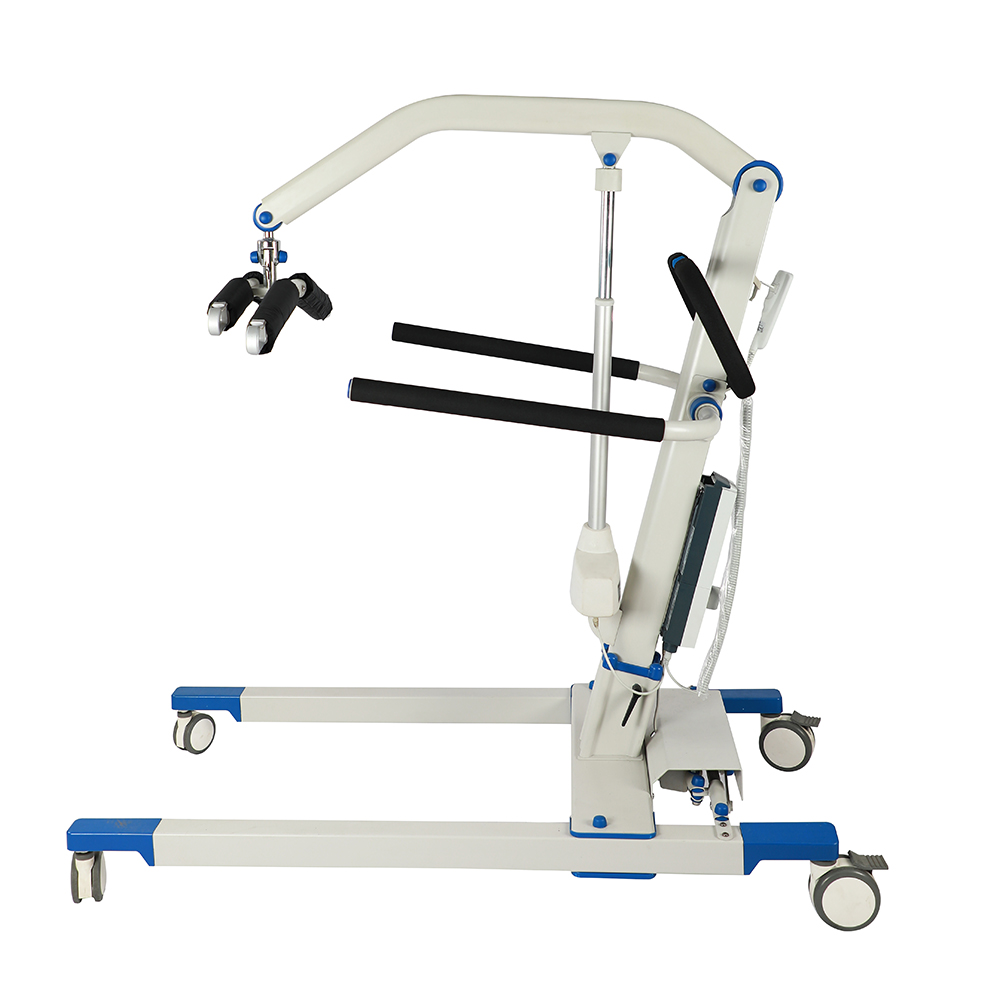
Evaluate the physical space constraints of the room. Tight corners require specific maneuvering strategies. For example, you must ensure the chosen fabric allows for optimal positioning when used with an Electric Homecare Patient Lift in tight residential bedrooms. Bulky padded materials might get tangled in compact spaces. Choose a streamlined design if maneuvering space remains severely limited.
Purchasing the correct equipment represents only the first phase. Maintaining that equipment ensures long-term safety. Invisible wear and tear present massive dangers to patients and caregivers.
Safety frameworks demand visual inspections before every single lift. Establish a strict checklist for caregivers. They must check for frayed straps, weakened seams, or tiny tears. Examine the attachment loops closely. If a loop shows signs of stretching or broken threads, discard the item immediately. Never attempt to sew or repair damaged transfer equipment.
Cleaning protocols often destroy synthetic fibers silently. Harsh bleach degrades polyester quickly. High-heat drying damages the internal structure of the fabric straps. This chemical and thermal degradation invisibly lowers the Safe Working Load. An item rated for 400 lbs might fail at 200 lbs after repeated bleach exposure. Train your laundry staff to use mild detergents and air-dry these items whenever possible.
Operational nuances matter in home environments. Discuss how the fabric interacts with the hardware during storage. For example, ensure a bulky or stiff sling doesn't interfere with the folding mechanism of a Foldable Electric Patient Lift during travel. Caregivers often cram the fabric into the machine's moving parts. This damages both the hoist motor and the fabric structure. Keep equipment neatly separated when packed away.
A successful transfer hinges entirely on a careful triangulation of factors. You must balance the patient's specific physical needs, the material capabilities of the fabric, and strict hardware compatibility. Skipping any of these evaluations introduces severe risk into daily caregiving routines. The right patient lift sling guarantees dignity, preserves skin integrity, and protects caregivers from career-ending back injuries.
Do not guess when selecting these critical medical devices. Take the time to measure your patient accurately. Consult with an occupational therapist or a mobility equipment specialist to conduct an in-person assessment before finalizing any purchase. Their clinical eye will ensure your hardware and fabric choices align perfectly for long-term safety.
A: No. Mixing brands poses severe safety and liability risks. Loop designs and clip designs vary slightly across manufacturers. Mismatched equipment can detach mid-lift. Always consult the manufacturer's compatibility guide before pairing different brands.
A: Look for even strap tension during the lift. Leg pads should reach mid-thigh without bunching. The fabric should support the back fully without pinching the patient's shoulders. If the patient slides downward, it is too large.
A: Lifespans vary based on usage and wash cycles. Typically, you should replace them every 1 to 3 years. Discard them immediately if you notice frayed straps, bleached fabric, or broken stitching, regardless of their age.
A: Leaving a patient sitting on solid fabric risks severe pressure sores and heat trapping. If removal is impossible, you must use specialized "all-day" spacer fabrics designed specifically to distribute pressure and allow airflow.


