

Views: 0 Author: Site Editor Publish Time: 2026-02-16 Origin: Site


How long do wheelchair batteries really last? The answer is often different from what users expect.Wheelchair batteries age over time, not all at once. Lifespan is about long-term durability, not daily distance.In this article, you will learn what battery lifespan means, what affects it, and how long you can realistically plan for.
A wheelchair battery rarely goes from “fine” to “dead” overnight. Instead, capacity and voltage stability fade, and the chair’s performance under load is what exposes that fade. For a reader who depends on consistent mobility, the most useful definition of lifespan is: the period when the battery still supports your typical route without additional planning, anxiety, or frequent mid-day charging.
It helps to keep these three ideas separate without turning the topic into battery theory. “Service life” is the number of years the battery remains usable; “cycle life” is how many charging cycles it can take before capacity falls noticeably; and “daily usability” is whether you can complete your routine with the range and torque you expect. In practice, daily usability is what drives satisfaction, because it is what you experience on sidewalks, ramps, and longer outings.
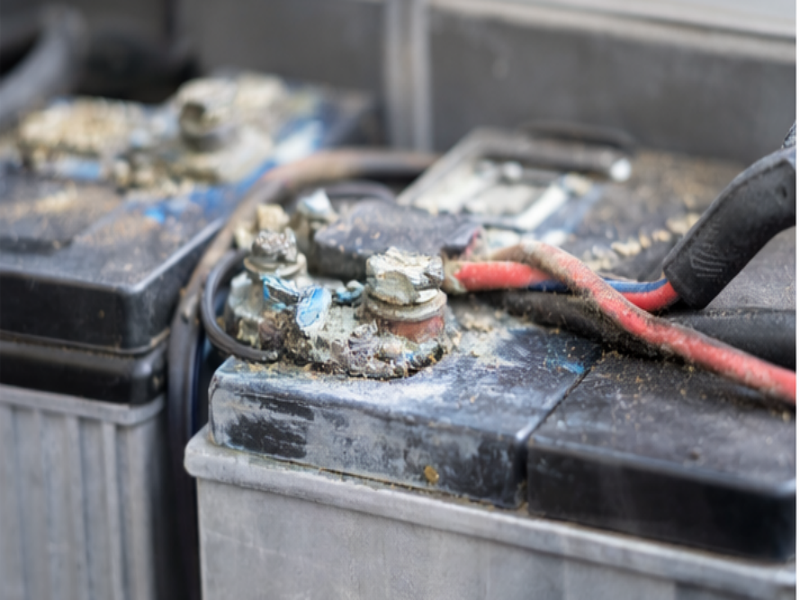
In real-world use, wheelchair batteries typically deliver about 1–5 years of acceptable service. This wide span is not caused by randomness or inconsistent quality, but by clear differences in battery chemistry and daily workload. A wheelchair used several hours each day on mixed terrain will consume its usable battery life much faster than one used lightly indoors, even if both batteries are technically the same type.
The most accurate way to interpret an “average lifespan” is as a planning window rather than a guarantee. Early in a battery’s life, performance usually feels stable and predictable. As aging progresses, the first noticeable change is often a reduction in effective capacity. The wheelchair still operates normally, but the distance you can travel comfortably becomes shorter, and battery indicators may drop faster during climbs, stops, or acceleration. This pattern reflects normal chemical aging, not a manufacturing defect.
Battery Type | Typical Lifespan (Years) | What the Decline Looks Like |
Sealed Lead-Acid (SLA) | 1–2 | Earlier range loss under heavier demand |
Gel | 2–3 | Smoother fade, often later than SLA |
Lithium-based | 3–5 | Longer stable period before gradual fade |
These lifespan ranges assume routine, ongoing use. Batteries can age more quickly if they spend long periods partially discharged or are repeatedly exposed to temperature extremes. Importantly, a battery continues to age even when the wheelchair is not being driven. Time, storage conditions, and charge state all influence internal chemistry, which is why lightly used or stored wheelchairs can still experience noticeable battery decline.
From a practical perspective, “lasting” does not mean the battery suddenly stops working at the end of its lifespan. Instead, lifespan describes how long the battery can reliably support normal daily mobility without requiring extra charging, reduced routes, or added planning. Understanding this distinction helps users and organizations set realistic expectations, budget for replacement appropriately, and avoid disruptions caused by unexpected performance loss.
Sealed lead-acid (SLA) batteries remain common because they are widely compatible and straightforward to support. In typical mobility routines, their useful service life often lands in the 1–2 year window, with noticeable performance softening appearing earlier when the chair regularly faces hills, heavier load, or repeated low-charge operation. The key point is not that SLA is “bad,” but that lead-acid chemistry is less forgiving of certain patterns that are common in daily life.
Gel batteries are a lead-acid variant that can be more stable in vibration and some temperature swings. Many users experience 2–3 years of service under comparable routines. Their decline often feels less abrupt than SLA because performance tends to remain steadier until later in the timeline, then fades more clearly once internal wear accumulates.
Why these types wear out faster is largely about sensitivity. Lead-acid systems are more affected by deep discharges and by sitting below healthy charge for extended periods. Over time, internal resistance rises, which means the battery may still reach “full” on the charger but deliver less usable energy when motors demand torque. Practically, that shows up as reduced “confidence range” and weaker performance on ramps rather than a dramatic failure event.
Lithium-based wheelchair batteries usually provide a longer planning horizon—commonly 3–5 years—and many users report steadier day-to-day behavior for most of that period. Lithium chemistry generally tolerates partial charging and frequent top-ups better than lead-acid designs, and it often maintains voltage stability under load for longer.
Lithium still ages, and it still responds to heat and high current demand, but its decline curve is often easier to live with because it tends to stay predictable longer. For lifespan interpretation, the practical takeaway is that lithium commonly offers a longer “stable middle” phase, which delays the point where range becomes a daily scheduling problem.
How hard the chair works each day is the most direct driver of aging. More daily runtime means more energy moved through the battery and more repeated charge cycles. Load matters because higher user weight, carried items, and heavy accessories increase current demand, especially during starts and climbs. Higher current usually means more internal heating and more stress, which accelerates capacity fade over time.
A useful way to think about this is not “miles” but “electrical effort.” Two users might travel similar distances, yet the chair that accelerates repeatedly, climbs ramps, and carries additional weight is drawing harder bursts of energy. That pattern consumes usable capacity faster and shortens the time before the battery no longer matches the user’s routine.
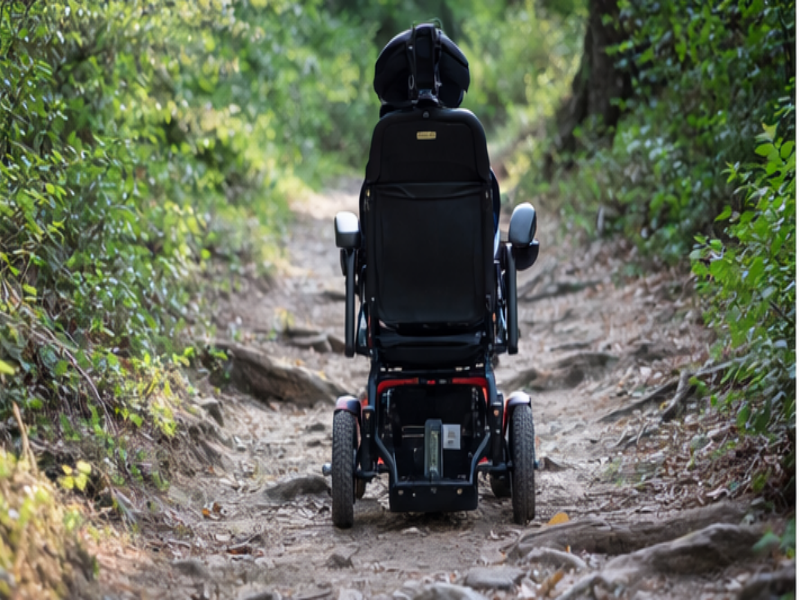
Terrain directly affects how hard the battery must work. Smooth, flat surfaces allow steady discharge, while ramps and uneven ground require sustained torque or repeated power bursts. Soft or rough surfaces increase rolling resistance, raising energy consumption for the same distance.
Operating Condition | Battery Load | Long-Term Effect |
Flat indoor surfaces | Low | Slower capacity decline |
Ramps and hills | High | Faster aging under load |
Grass, gravel, uneven paths | Medium–High | Reduced usable cycles |
Frequent stop–start driving | Medium–High | Accelerated wear |
These conditions do not cause immediate damage, but they increase long-term wear. This explains why identical batteries can age differently depending on where and how they are used.
Charging behavior can either preserve usable life or accelerate decline, especially for lead-acid and gel types. Repeated deep discharges are commonly harsher than moderate discharges, and long periods left partially discharged can reduce recoverable capacity. Storage is part of the same story: a battery that sits for weeks in an unhealthy charge state is aging in a way that is not visible until you need the chair.
Temperature shapes all of this. Heat accelerates chemical aging across battery types. Cold reduces efficiency and can make an aging battery feel much weaker under load, even if the battery is not permanently damaged by a brief cold exposure. If the chair is routinely stored in uncontrolled environments, the battery’s practical lifespan often lands toward the shorter side of the expected range.
Replacement timing is best framed as a reliability threshold rather than a calendar deadline. Many batteries continue to operate after they have stopped being practical for a user’s daily pattern. The “right” time to replace is usually when performance no longer supports normal trips without extra planning, frequent mid-day charging, or concern about completing routes that used to be easy.
Rather than restating lifespan ranges, use the earlier battery-type ranges as the budgeting window and use performance changes as the trigger. If your battery type is typically replaced sooner (such as lead-acid), proactive planning reduces the risk of downtime. If your battery type is typically longer-lived (such as lithium), replacement is often driven by a noticeable usability shift rather than a date on the calendar.
Decline is easiest to identify by repeatable changes in the same routine. The most common early signal is reduced usable range on familiar routes. The second is charging behavior that changes without improving usability, such as longer time on the charger but no meaningful recovery in range. A third pattern is uneven power delivery under load, where ramps or acceleration feel less stable than before.
To keep the decision concrete, look for these patterns across multiple days rather than a single outing:
● Your typical round-trip now requires additional charging you did not need previously.
● Range falls noticeably faster outdoors or on inclines than it did in the past on the same route.
● Power feels inconsistent during acceleration or climbing, even when the battery shows a high state of charge.
If a chair uses a matched pair of batteries, replacement is commonly done as a set to preserve balance in performance. Mixing a new battery with an older one can complicate consistency and make it harder to interpret future symptoms because the system is no longer aging evenly.
Wheelchair batteries typically last one to five years in real use. Lifespan varies based on battery type, usage intensity, and care habits.Understanding gradual decline helps users plan timely replacement. This reduces unexpected downtime and supports daily mobility needs.JBH Medical provides wheelchair batteries built for stable performance. Their products focus on durability, safety, and reliable long-term use.
A: Wheelchair batteries typically last one to five years, depending on battery chemistry, usage intensity, and charging conditions.
A: Wheelchair batteries age faster with heavy daily use, frequent deep discharge, high load demand, and exposure to extreme temperatures.
A: Yes, wheelchair batteries using lithium chemistry usually last longer and maintain stable performance over more charge cycles.
A: Wheelchair batteries should be replaced when reduced range or inconsistent power affects predictable daily operation.


